
Get a free MP3 of my book MSP marketing: Start Here
when you join 8,000 other MSPs getting my weekly newsletter
Let’s look at why webinars are an amazing way for MSPs to grow their business primarily because most MSPs aren’t doing them. Also this week, get up at 5am every weekday to grow your MSP, and before you do any marketing or sales, you MUST get these foundations right.
Welcome to Episode 347 of the MSP Marketing Podcast with me, Paul Green, powered by the MSP Marketing Edge.
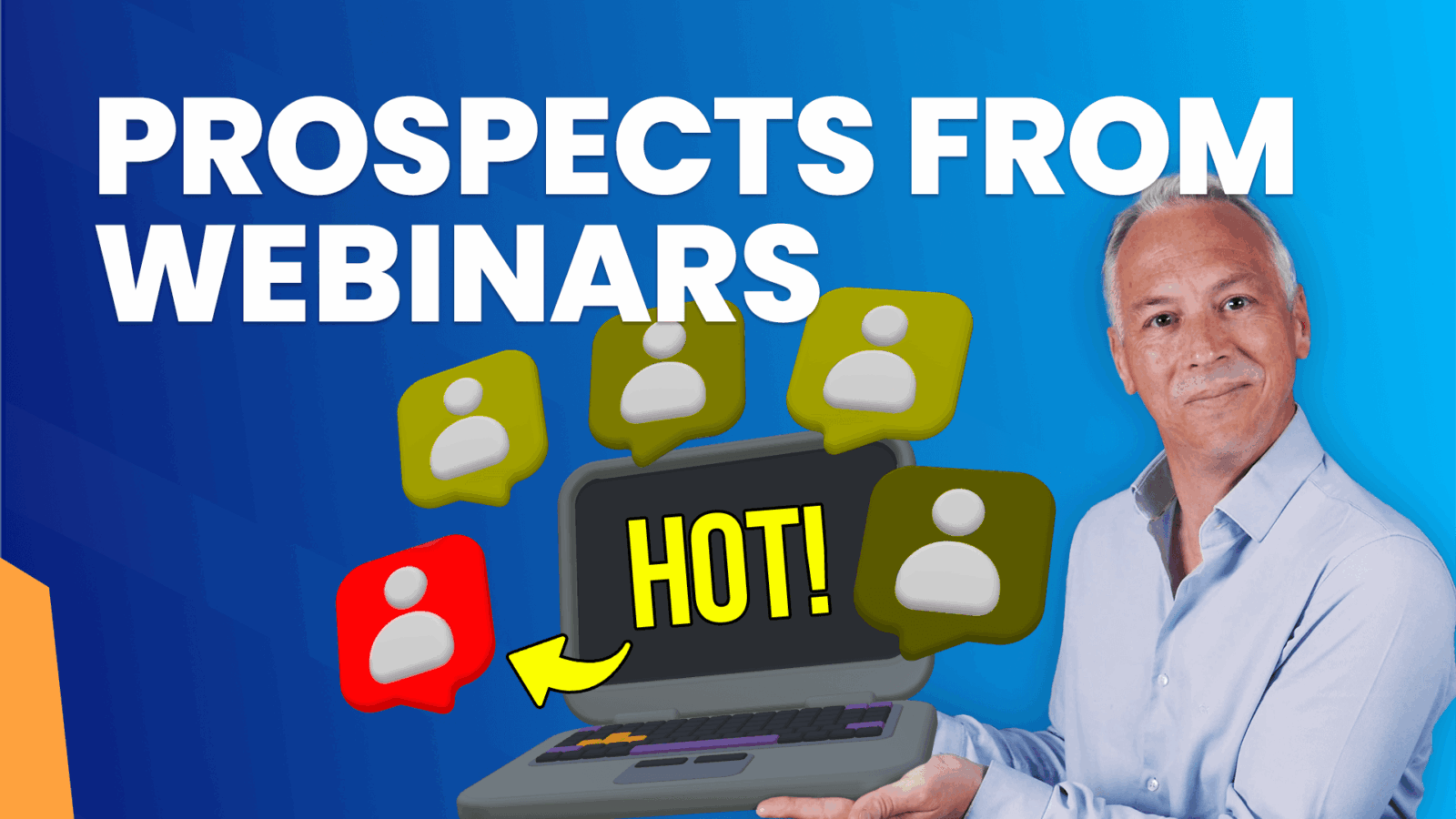
How to use webinars to identify the hottest prospects
So have you ever thought of doing webinars to promote your MSP and if you have, what stopped you from actually going ahead with it? Were you worried that perhaps no one would turn up or worse than no one… one person would turn up? Or maybe you were worried about your own performance. Let’s look at why webinars are an amazing way for MSPs to grow their business primarily because most MSPs aren’t doing them.
And let’s just address this right from the start. Yes, there is room in the world for more webinars. You might think there are too many webinars already, but that’s just because you’re inside the channel. Outside the channel, they are getting lots of webinars about the law or carpentry or manufacturing or whatever line of work your prospects are in, but they’re not hearing a lot from MSPs that are pushing technology and talking about the importance of cyber security.
There’s plenty of business out there to be won through webinars, but you’ve just got to approach it the right way.
Most MSPs think the goal of a webinar is all about getting the attendance numbers in. Get 50 people on a webinar, get big conversion rates. That’s not what it’s about at all. The real goal of a webinar is intelligence. It’s telling you something about the leads and the prospects that you’re talking to right now, the people who are in your CRM or who are connected to you on LinkedIn. I mean, even if you just look at who has done something, so who registered for a webinar in the first place?
Actually, you could take that back a step and say, who clicked the email link to have a look at the webinar that I’m promoting? Who then registered for that webinar? Who then showed up for that webinar? Who stayed for the majority of it? Who asked questions? Who booked a meeting or did something afterwards to say thank you? All of this tells you really interesting things about the leads and prospects that you are talking to. And it helps you to kind of sort out the wheat from the chaff. It helps you to show who are the hottest prospects right now and where should you be focusing all of your attention. I mean, the very fact that someone would attend your webinar or even register for your webinar that says something to you.
Now, you might know that with my members, I work either helping them to win B2B business, which is what most MSPs want, more business owners, or I help them to grow their co-managed business, so helping them to reach IT directors. And in both these instances, webinars can be a really, really powerful tool. It can help you to see who through their behaviour alone is worth me talking to. Who’s worth me following up, ringing them, sending more emails to them, sending stuff to them in the post in the mail.
Someone registering for a webinar and turning up for a webinar and being engaged with a webinar, it’s like their hand going up. These are buying signals that people are inadvertently sending to you and it’s great for you because you then know exactly who you should be following up and exactly who you should be talking to over the next couple of weeks. Now there are three, if you like, kind of three tiers of heat after a webinar. By heat, I mean, how hot is a prospect.
So the first tier is where someone has attended and they’ve asked a question or they’ve stayed to the end. So they’ve turned up, they’ve stayed engaged. In fact, if they’ve asked a question, they’re the hottest possible engagement. These are the hottest people and they’re the ones that you should be on right now. Someone who attends a webinar, regardless of the subject, let’s assume it’s just about something technology. It could be cyber security, it could be productivity, it could be about co-managed IT if you’re trying to win co-managed IT contracts.
The fact they attended and stayed and engaged with you, that shows they’re interested. Now, the timing might not be ready for them to actually take the next step or go and buy from you, but I would definitely ring them straight after the webinar. You could ring them and lead with literally, “It was great to see you on the webinar. I loved that question you asked me. Hey, did I answer that question well enough for you or do you have follow-up questions to that?” And in a one-on-one environment, someone is much more likely to start asking follow-up questions and that’s more engagement, right? Now you’re on the phone with them, you can push to have that proper discovery call or even to have that in real life sales meeting. So that’s the first level of heat.
The next level of heat is where someone’s registered and they’ve attended, but they’re passive. They’re a lurker. Lurkers are going to be 90% of people who show up on your webinars. In fact, there’s something called, I think it’s something called the 90/1/9 rule. When you’ve got any kind of performance or show or webinar or even something like a community or something like that, 90% of people who use that are not going to engage with it. They’re lurkers. They just want to turn up for seeing what’s there. 9% of them will engage in some way and 1% of them will take a bit of a leadership position. So 90% will do nothing. 9% will engage and 1% will create new content or ask amazing questions that just contribute, but the vast majority of people are lurkers. So if you can get people to show up to your webinars, that is where most of them are going to be. They are just going to be warm.
Now the next level of hotness down is where they registered, but they didn’t show up. And it’s still worth following these people up because even if someone’s registered that says to you that there is a level of interest there. And actually what you may find is that they may register for two or three webinars and eventually they will show up for one. The thing about a webinar is, and you’ve done this and I’ve definitely done this, is we get to the day where we really intended to go onto the webinar and then 10 minutes before we’re looking at our watch and we’re like, “Oh, I’m really busy today. Do you know what? I’ll watch the recording.” And you will find that for every person who shows up to your live event, two or three or four will watch the recording, which just goes to show that’s true. But obviously the downside of them just watching a recording is there’s no engagement. You don’t know what questions they would’ve asked, etc. etc.
So there’s your three lead heat registers there. And actually with the no shows, I forgot to say that no shows are not dead leads. As I say, send them the recording, watch who watches it. You may even invest in some kind of software which tracks for you, not just who’s opened it, but who’s watched to the end. Someone who opens it and watches 30 seconds are not as hot as someone who’s opened it watched three quarters of the way through, that’s going to be a much hotter prospect.
But all of the purpose of the webinar and the reason that you’re doing it is to find out who’s hot right now so that you can then follow them up. Webinars should not be done just for educating your audience or entertaining them. The webinars should be done because they help you to see who are the hottest people to speak to. So you can put all of your tiny amount of resources onto just those people. So your follow-up sequence should be different for each of those tiers.
So the hottest tier, as I say, they should get all of your attention. I believe if they’re hot, and that means they’ve attended and they’ve engaged with you, personal outreach within 24 hours. Reference something specific from the webinar, their question or something they liked or something like that, or go in just with a question about the webinar. It’s a really easy way to start a conversation with them.
All of the other people, of course, you should send out the recording. You should send them your live calendar. You should say, “Hey, as you know, we help local businesses with this kind of stuff. Here’s my live calendar. The next step is to have a 15-minute one-on-one conversation with me. ” Some of those people will book that conversation when they’re ready to do that. So that’s how I see webinars. I see them as a way of sorting the wheat from the chaff, but what do you actually do a webinar about?
Well, I believe on webinars, topic choice is absolutely everything. So you have to pick a subject, not that you are interested in presenting, but a subject that your ideal prospect is genuinely worried about right now. So as an example, it might be cyber threat topics. I mean, they don’t want the ins and outs of today’s big cyber threat because they don’t really care. Unless it’s something like, CrowdStrike. CrowdStrike, which took down the world, all the planes stopped, didn’t they? So when something like that happens, it’s very much on the mainstream news then it’s of interest to them. But all of the other stuff that’s in front of you today, they don’t really care about it. But you can talk to them about how other business owners like them have been threatened or hit by cyber security problems. If you work with a client and they got breached and you rescued them, perhaps they got breached because they didn’t follow your advice, you can use the anonymised case study of that to educate other business owners. This is not using FUD (fear, uncertainty and doubt), this is purely an educational thing.
So cyber security threat topics are great. Compliance deadlines are great because they’re deadlines and in marketing we love deadlines. AI… AI is everything right now, right? Copilot, go and do a Copilot webinar. I know loads of MSPs who are putting on Copilot webinars and they get loads of people registered and loads attend because people want to roll out Copilot. They want to use AI strategically in their business and they don’t know where to start. And you can use this either to sell your general managed services or even some Copilot consulting.
These kind of topics, they pull in warm audiences with a pain, and that’s the key thing. They pull in people with a pain. When someone has a problem to solve or something they want to gain or a need or a want, they’re dramatically more likely to engage with you. And if they engage with you, they’re dramatically more likely to actually go on to do some work with you down the way.
Webinars also give you a reason to reach out to your LinkedIn connections and particularly cold LinkedIn connections to people you don’t really know. You can reach out to them and say things like, “Hey, I thought this would be relevant to you. I’m doing a webinar series. It’s for local business owners. I don’t think you’ve attended one yet. I wonder which of these subjects might be relevant to you. Are you interested in cyber security? I’m doing that in the next couple of weeks, or I’m doing one about Copilot AI next month,” Or whatever the subjects should be.

Now that brings me onto how often should you run webinars? Well, I believe you should run them quarterly at a minimum. You might even choose to do them monthly because you could do the same three webinars but just on a repeating pattern. So it could be productivity, cyber security, AI. So every month you have a new webinar, but actually you’ve only got to do three webinars and just do them on a repeating loop. And the compounding effect of this builds your reputation. You’re trying to be perceived as the local technology expert, right? Well, either locally or in your niche, your vertical. So doing webinars on a regular basis makes you an expert.
There’s something that hasn’t changed in the AI age, which is that experts create content. And yeah, sure AI can do that for you super easily these days. So now you need to bring yourself above just the blog articles and the LinkedIn stuff that everyone is knocking out with AI, and you can tell it’s AI most of the time. You need to write seriously write proper things like a book or you need to present, go and present at live events or go and do webinars on a regular basis.
Experts share what they know and how it helps other people. So if you really want to be seen as a technology expert, doing a quarterly or a monthly webinar is a great way to do this. So there’s a lot to think about there and I know that webinars are scary, but you’ve got to remember this. Webinars are not just a great way for you to find out who’s hot right now and give you an easy in to start a conversation with them, but the MSP who runs webinars on a regular basis is automatically positioned as the authority and most people in most marketplaces want to buy from the authority.
Would you get up at 5am every weekday to grow your MSP?

Would you like to hear my personal confession? I got up at five in the morning every single weekday for 15 years from 2005 to 2020 and not because I’m a masochist of some kind or extreme. It’s not because I don’t sleep well. I sleep very, very well, but it’s because I wanted to work on my business.
And actually 2005 was when I started my first business. I sold that in 2016, which is when I started working with lovely MSPs and I kept that habit going until it stopped in lockdown. And I’ll tell you a bit more about that in a second. But getting up at five in the morning allowed me to have a chunk of time every single day to do the important things that grow your business.
The biggest problem as a business owner is how do you find enough time to work on the business when you’re so busy working in the business.
Now, let me tell you some stuff that kind of made it easy for me to get up at 5am I kind of had a head start because my previous job before I started my business in 2005, I was a breakfast radio presenter so I was getting up. You know the people you hear on the radio in the mornings, who listens to radio, it’s 2026 Paul, but if you do, they all sound a bit up and high and woo and jolly. Often that’s because they’ve already been up for a couple of hours. So my show started at six in the morning, I was up at four in the morning and I was at work by 4:30.
So getting up at four in the morning and quitting that job when I started my own business, getting up at five in the morning actually felt like a lie in. So I will admit, yes, I kind of had it easy, but it was still a hard habit to keep going for all of those years. 15 years I kept that going. Unfortunately, I lost the habit in lockdown. I started sleeping in a bit more. We all did, didn’t we? Because our lifestyles were different, better in some way. Whitehaired Paul today needs his sleep, so now I get up at six and I don’t know if I could ever get up at five again, but the principle behind getting up at 5am every weekday has never changed.
You’ve got to remember this, the only real silver bullet to grow your MSP is taking action. Action. It’s all about the action. Loads of people know what to do. Knowing what to do isn’t the problem anymore. In the age of AI and with people like me and hundreds of other people who know exactly what you need to do to grow your business, knowing what to do is not the problem. The problem is taking action. And whatever the problems right now in your MSP, action can overcome them. You can call it if you like, the will to act. The will to act means you know you’ve got things you need to do, you know that they’re difficult but you are choosing to protect time at the beginning of every working day to get things done.
The choice is the most important thing. There were many mornings that I woke at 5am and it was a struggle. It really was. And there were times when I just pulled my laptop into the bed with me and I worked in my bed at 5am, which sounds a bit sad, but it helped me to grow and sell one business and it’s helped me to grow another business. Now as you’re listening to this, you might be thinking, “Well, 5am is too extreme. I’m going to do 9am or 5pm or I’m going to do two in the morning because I’m a night person. That’s fine, you do whatever works for you.
Me, I’m a morning person. I do my best work in the morning. I get tired by the time I get to the evening. I’ve been like that for years. So for me, I work better in the morning. The one thing I would say is however and wherever you’re thinking of doing this, make sure you do it as a weekly thing. It’s a really easy temptation to just batch everything into one admin day a week. And I know loads of MSPs that do this. They say, rather than doing 60 or 90 minutes every morning, every weekday, I’m just going to do a whole day on Fridays.
But what happens is that when you get to Fridays, the days get completely hijacked by all the crises and the catching up that have happened Monday to Thursday. So you get to Friday and you’re like, “Oh my goodness, what a week, clear up, clear up, clear up. It’s lunchtime, go and have some lunch.” Before you know it, it’s three in the afternoon. You’re exhausted because it’s the end of the week and you end up doing two hours. Whereas if you do an hour a day, every day, it’s five hours, I recommend 90 minutes, that’s seven and a half hours a week versus two or three hours on a tired time on a Friday. Those admin days are way, way too fragile.
So as I say, a better approach is to find and protect 60 to 90 minutes every single weekday to work on the business not in it. And that should be a minimum, not a target. 60 minutes is definitely the minimum. I would say do 90. Once you’ve done 60 minutes of work, the extra 30 minutes doesn’t have the same impact. How can I explain that better? If you do 60 minutes, you need to put time aside, you need to find an environment to work, you need to separate yourself from hassle and clutter and noise. But once you’ve done that 60 minutes to keep going for another 30 minutes gives you a lot more value back than if you were to stop and try and do another 60 minutes the next day.
So 60 to 90 minutes, 90 will be great. Two hours will be even better. And as I say, 5am is too extreme for most, which is fine, I get that, but aim for the same time every day so it becomes a habit. Turning this into a habit is the golden thing. Have you ever read a book? It’s called Atomic Habits by James Clear. It’s an insanely great book. I think it’s the bestselling productivity book in the world right now and it’s all about turning actions, things that we want to achieve, into habits. And this is exactly this.
This was a habit for me of getting up at 5am and working on the business and it was such a core habit that even if I’d been out like on my Christmas party the night before, I still woke up at five the next morning, even if I’d only had four hours sleep. I didn’t always work in that environment, but you get the idea. My brain was so used to waking up at five to do work. One final thing on this is that environment matters. And I mentioned getting away from clutter and hassle and noise. Where you do this work is really important.
So over the years I went to different places depending on the age of my child. So when she was just a baby, I had an office at home. When she became a toddler and she figured out that daddy got up early every day, I got an office away. When I had an office full of staff, I had an office away from my staff. These days I do it partly from home or I’ll go out to a Starbucks or a hotel lobby or something like that. It doesn’t really matter where you do it as long as you can get work done and you’re uninterrupted. No one can call you, no one can text you, certainly no PSA, no Teams emergencies aside. There’s always a once a year emergency, that’s fine. But for the rest of the time, for the other 364 days or however many days, 280 isn’t 280 working days a month, then you must not be interrupted.
And what not to do with this time is easier than what you should do. Let me tell you some stuff you shouldn’t be doing with this time because it’s for working on the business. You shouldn’t be doing emails, you shouldn’t be doing admin, you shouldn’t be doing social media. Basically you shouldn’t be doing anything that’s working in the business. If it’s a job that someone else can do, then you let someone else do it. You as the owner should only do what only you can do. So what you should do with this time, well, actually you can kind of drill it down to three things:
- Action number one is anything that wins you new clients.
- Action number two is anything that gets your existing clients to buy more often.
- Action number three is anything that gets your existing clients to spend more.
So win new clients, get your existing clients to buy more often, get your existing clients to spend more. If you improve those three areas, the profit will follow, I promise you. And once you’ve got more profit, you can invest that back into the business to buy back your time and your life. This is how we grow businesses. We focus on increasing the amount of cash in the business. Then we invest that cash into other people to do work that you necessarily don’t have to do and then you carry on growing the business and eventually more of that cash sits in the business bank account and enters your bank account.
Now one pro tip on this, well, I’ll give you a pro tip and a tool recommendation as well. The first pro tip is at the end of each day, organise the next day’s activity list before you finish. This is a hardcore habit for me, which I still do every day. Even if I’ve got no time, I will take five minutes to stop and organise the next working day. Because it means when I start the next working day, and I don’t work at 5am now, but I do spend three or four hours of every working day working on my business and I know exactly what I need to do because I organise it the day before. I promise you organising it the day before is so much more efficient than on the day. Often you’ll be in the shower in the morning and your brain will go, “Oh, I’d put X Y Z first, but actually it needs to be Z X Y.” So just sleeping on it overnight helps you to reorder that list.
So that’s the first thing. The second thing is let me just give you a tool recommendation. I use a tool called Todoist. I know everyone has their own personal favorite tool. I’ve been the paying user of Todoist for 15 years and I checked just before recording this podcast, I’ve now completed 78,482 tasks over the 15 years. Now, whether you use Todoist or Microsoft To Do or whatever you use, because there are thousands of them out there, use a productivity system that works for you, but make sure you do use some kind of productivity system. If you don’t have organisation and focus, you can’t operate at the level needed to grow your business.
So protect some time every single weekday working only on your business and never working in your business and being highly organised and disciplined. And do you know what? Because you don’t have to do that at 5am, instantly that’s just got easier for you. All you’ve got to do now is do it the first time and have it in your mind you’re going to repeat it. Could you do this tomorrow morning?
Members’ Update
If you’re a member of the MSP Marketing Edge, don’t forget that we are just three days away from new content dropping. So this podcast comes out on the 7th of July 2026 and on Friday, which is the 10th of July, we drop all of the new content into our two portals. And we do this on the 10th of every single month. We have two memberships, there’s a B2B marketing one, which gives you all of the marketing content you need to attract and warm up business owners, and then we have a co-managed marketing one, which has got different content to help you attract and warm up IT directors. And it has to be different content because IT directors think and buy in a completely different way to business owners.
Now, unlike all of our competitors and all of the big vendors that just give you content and dump content and say, “There you go. Off you go. Get on with it.” They don’t really tell you what to do with it – we have a complete system. So we tell you exactly what marketing tasks that you need to do and how you can get other people to do them for you. And by other people, I mean your team or a virtual assistant. We give you new content on the 10th of every month and we give you world-class support. In fact, every day a few of my members jump onto a one-on-one video call with a member of my team and we are chatting with many more of them on email or in our knowledge base at all times.
Do you want a bit of this? If you’re not yet a member, as I say, there are two memberships available – B2B to help you win more business owners as clients, and co-managed to help you win more IT directors. And each one is only available to one MSP per area. Check if yours is available at mspmarketingedge.com/membership.
Before you do any marketing or sales, you MUST get these foundations right

Featured guest: Brian Gillette is the founder of Feel-Good MSP and host of The MSP Sales Podcast. A former MSP VP of Sales, he specialises in an empathy-driven, “FUD-free” sales process that prioritises client trust, authenticity, and peace of mind.

I’ve got one of my friends back on the podcast today and what the two of us do to help MSPs is perfectly complimentary. I help MSPs to generate leads and get those leads onto sales discovery calls, the 15 minute calls, and Brian sort of picks up from there taking MSPs through the sales process until you have a client.
Today we’re going to talk about why MSPs so often fail with their marketing and sales efforts and for many it’s because they just haven’t got the foundations right before they start.
Hi, I’m Brian Gillette. I’m the owner of Feel-Good MSP and the host of the MSP Sales Podcast.
Boom. And Brian Gillette is back on the show. It’s been far too long. Thank you so much for joining here. It’s awesome to be on because just a few months back I guested on your launch of your brand new thing. It’s the biggest thing that you’ve ever launched. It’s called Foundations, and you’re going to tell us a little bit about that later on in this interview. But I did want to get you on today to talk actually about foundations, not the new program that you’ve launched, but actually the sales and marketing foundations that MSPs need to have in place because you and I know we work with enough MSPs to know that most MSPs don’t have those foundations in place. So that’s what we’re going to explore in this interview. Before we do, just tell us who are you, Brian Gillette.
Right. Wow. Where to start? I’m a complex flower, Paul, you know this. I’m a sales guy. I turned an IT sales guy back in 2017 when I discovered managed services by accident because I wanted to get into tech sales, but at the time I didn’t think I was smart enough to be in SaaS sales. So I was like, maybe I’ll do something else in tech. And I feel like tech is the future. And I found managed services and I was like, “Oh, this is awesome. I love selling services.” So anyway, that’s my background, I’ve been in sales for 15 plus years and been an MSP for a decade of that.
And for those of you watching on YouTube and you’ll see how young and beautiful Brian is, you’ll wonder if he actually started those sales, his sales career when he was seven years old. And the answer to that is of course yes. So you started FeelGood MSP, it’s got to be coming up for about five, six years now.
Yeah, five years in July. And your first interview with me was almost exactly four years ago.
Wow. Has it been that long? That’s crazy how quickly the time goes. And so you’ve been working one-on-one and in groups with MSPs and helping them get the sales right. And it’s really interesting, I think when you came along five, six years ago, Jennifer Bleam I think she just started around the same time. There was a lady called Fiona Chalice, I think Fiona still does bits and bobs in the channel, but there wasn’t really anyone else properly doing sales and working with MSPs on the specific techniques and understanding the psychology of the buyer and stuff that today you and I might think is the basics, but I think the majority of MSPs still struggle with this stuff. Why do you think MSPs struggle with getting these basics of their sales and their marketing right?
Well, that’s an interesting question because in some ways the basics, the external basics, I’ll call those the tactics, they can grasp, but there’s this prerequisite to being successful in sales and marketing, which is a level of understanding, the way you put it was the human psychology of it. And I think that’s actually where they get stuck. Because anybody can hire an agency to go make cold calls for you, hire an agency to go make content for you. And those are manifestations, those are tactics that are important in creating leads, but if you don’t actually understand how to connect with another human being on an empathetic level, then their marketing is going to come across as hollow. And frankly, they’re not even going to see it. They’re going to scroll right by it because it can’t penetrate their mental spam filter.
So I think the real foundation that people miss is the psychology of selling. There’s no psychology in IT. They’re different sciences. And so I think in that way, it’s not like one of the romance languages where if you understand one of them, you can kind of fiddle around with the other one. It’s like Chinese and Klingon. They’re just so different that unless you’ve studied the psychology, then a lot of the tactics won’t have any teeth because there’s no human connection in it.
So for the average MSP that’s owner-operator and it’s them plus two, three technicians and an admin person, so they don’t yet have the resources to take on marketing people or take on salespeople, which I think is 80% of the MSP market, by the way. I guess for those people, when you’re fluent in Chinese and actually suddenly you’ve got to talk Klingong, maybe you don’t even know that it’s called Klingon. You know that you can’t quite understand, but you’re not quite sure why. Would that be the right way of looking at it, that sometimes not even knowing you’ve got a problem or you’re speaking a different language is the issue?
Yeah, that’s right. And it’s because the agencies of the world, they are selling a promise prematurely to the MSP audience for a lot of reasons. But if somebody is natural at sales and then they succeed at sales, it’s like if somebody wins the lottery, then you went and say, “How did you do it? And they went, “It works. Trust the system, liquidate your assets, spend it all on tickets, trust me.” That’s awful advice because it’s not up to them that that happened to them. Success happened to that person and they didn’t cause it. But the danger is that somebody wins a lottery and then they take mental credit for picking the winning ticket, picking the winning number.
And sometimes that happens on the agency level where people are even more natural or they’re predisposed to be good at sales and then they don’t understand that they have some baseline understanding of sales that the average person doesn’t start with so they forget to teach those things. So what they do is they teach you the right things in the wrong order. MSPs start with all the end in mind and they go, “Well, I’m doing all the end play sales and marketing things, but nothing’s working.” Because they’ve skipped the whole foundation of it. And so you’re right, they don’t know what they don’t know, but they don’t even know that there was a level one because they were sold that level three is where you start.
Yeah, that makes perfect sense. So do you think agencies do this inadvertently? Because as you say, I don’t run an agency, you don’t run an agency, but we both know people who do. And some of them are very, very good. Some of them are the other end of the scale and there’s a lot that sits in the middle. My take on agencies has always been that the owner or the person of the most highest level of competence in the business says to the MSP or any business they’re working with, “Oh, you know that thing I’m good at,” which might be SEO or it might be pay-per-click. They say, “Oh, this is the route that you do it, ” because exactly as you’ve just said there, that’s the thing they’ve had the most success with. So they’re not doing it maliciously, but it’s just a case that the only route that they’ve seen is to do X, Y, or Z. And yet often that might not be the right solution for the MSP that they’re working with.
Yeah, that’s right. It’s very rare that you find somebody who just has malintent, like I want to rip people off. Even the people who are true con artists, they are playing mental gymnastics to justify it in their own brain while they’re taking advantage of people. Usually what I have found is it’s the Dunning Kruger effect. The Dunning Kruger effect, for anybody who’s unfamiliar, it’s really interesting and I’m going to butcher it down into two soundbites, which is that when you are incompetent, you aren’t self-aware enough to understand that you’re incompetent. So people get a baseline of education. So somebody takes a writing 101 course and then they go, “I’m Ernest fricking Hemingway. I’m the greatest writer of all time because I got an A in writing 101.” But they don’t understand there’s like a thousand more hours of education they could get, but they don’t know about any of that sphere, that domain of knowledge. They’ve mastered a little domain of knowledge and then they assume competence in the whole area.
And then the inverse happens on the Dunning Kruger effect, which is what happens to our MSPs is the curse of knowledge where you have so much information and knowledge in your head, a lot of it is now subconscious knowledge that you forget what it’s like not to have that knowledge. And so we find that true masters oftentimes have a lower self, they assess themselves lower than people who are brand new in terms of their overall skill level because they know enough to know how much they don’t know, versus a novice doesn’t.
So somebody sees success, they strike gold in one tactic and then they go, “Oh, I’m a marketer now. I can teach marketing.” And then they go, “Well, if I could do SEO, then I could do all these other things.” But that’s not necessarily true. So it’s actually incompetence is the right word. There’s probably a more elegant way of saying that, but it’s when you have a small sliver of information, you assume you know everything and that’s the danger of working with somebody who was successful one time projects that success and says, “I can recreate this. ” But very often they can’t recreate it, which is why we see many agencies with so much churn. And why we talk to so many MSPs, Paul, who have lost so much money trying five or six or seven different things.
Yeah. So it’s really sad because by the time you have that conversation, they’re blaming marketing. Marketing doesn’t work or sales doesn’t work, which of course is nonsense, of course it does. I think maybe what you’re looking for is unconscious and conscious incompetent, whereas there’s four, isn’t it? There’s conscious competent, unconscious competent, you get the idea. Take those two words and put them together in the four variations. So some people are consciously aware of where their skillset ends and many people are not aware. I completely agree with you on that.
Let’s move away from agency bashing, which is a favourite subject when you and I talk to actually getting into those foundations. So if you take that average MSP, and we’ve now established they’re talking Chinese, but the people they want to speak to speak Klingon. The average MSP knows so much about technology. It’s become unconscious. It’s literally embedded in their soul and that means that they’ve forgotten that the average Joe that they speak to doesn’t have that understanding right down to the average person doesn’t really understand the cloud, it’s just data’s out there, they certainly don’t understand ransomware, they really are many, many books behind on AI, let alone pages behind. So with all of that, when you start talking with MSPs and let’s bring in your new foundations program, what are the basics and the fundamentals that the MSPs need to have in place before they start going out and doing the tactical stuff and the strategic stuff to actually generate leads and try and book appointments?
I will say that the thing that nobody wants to hear, but which is the truth, is that 80 to 90, maybe even more than 90% of the ingredients you need, you already know what they are and you might already be cooking with some of them. But the analogy I’ve been using that’s been helpful for me in describing this is that,
MSPs are mistaking sales and marketing for a list of ingredients rather than a recipe.
Now a recipe includes a list of ingredients, but what does it also include? A list of tools that you need, a series of events. The order in which you do the tasks or do the items on a recipe is critical to the success of a dish. If I’m trying to make pasta and I don’t take the noodles out of the packet and I put the whole packet in the boiling water, I’ll get melted plastic water. I won’t get cooked noodles.
That’s what people do is they go, “Well, I need content.” Okay, so they just run out and start posting content every day, but they haven’t even figured out who are you trying to sell to and what do they care about? Well, that’s throwing an unopened pack of noodles in the water. The other thing is the series, again, the series is important. How much time you spend on each item is very important because I got a cold caller, it’s been three weeks, he hasn’t made any money, I fired him. Well, that’s like if you boil your noodles for 12 hours and you cook your beef for five seconds, you’re not going to make a very good dish. The amount of time you invest in each one is important.
The sequence that you do them in is very important and the tools that you use for each one is very important. You can’t cut vegetables with a crayon. You have to have a knife. So the mistake people make is that they fixate on one guru or one thought leader who is very good at the chopping part and then they buy a $10,000 knife thinking, now I can make this dish. But in reality, they just overinvested in one tool. And what they need to do is zoom out. Sales and marketing is not magical. It’s make yourself known, agitate or create a problem, introduce a solution, build enough trust where they buy it and then tender payment. That’s all you have to do. There’s nothing new that I can teach you that you’ve never heard of. There’s not some new social media platform that you don’t know about yet that all of your prospects are hanging out on and there’s no MSPs there. That doesn’t exist.
But if you focus on the true fundamentals, the true foundations of get my list of ingredients, my list of tools, and then start with “Step one, do this, step two, do this, step three, wait 14 days, then do this.” Then we have found that when people simplify it, and don’t get cute, don’t try to build, don’t try to vibe code a CRM that’s rocket powered. You don’t need that. You could do this on Excel. You could make a $2 million a year business using Excel. You shouldn’t, but you could. You know what I mean? A poor workman uses this tools where we have no shortage of idioms here, but if you’re focusing on, I just need more and more tools, more and more tools, it’s because you’re not executing the very simple steps.
So the simple first step to the recipe is you need to build an ideal customer profile. And for us, that includes understand what is your value proposition to that person? What is your differentiator to that person in a way that they care about, not like we’re a Kaseya shop versus a Connectwise shop, obviously they don’t care. Response times is not different. There’s nothing different about saying you’re fast. There’s nothing different about saying you don’t use tech talk. There’s nothing different about saying that you actually care. There’s nothing different about saying that you’re local. Because every MSP says those four things. So if you’re using that to make yourself different, well, I’ve just given you your next task. You need to go and ask yourself, why am I actually different? Why am I actually better? But when you’ve done that homework, which by the way, we have a whole agent for that does it for you now in 30 minutes. It used to take us five weeks.
When you’ve done that homework, all of a sudden the outbound messages they’re going to resonate with someone because you wrote it to someone, not to everyone. And then those people are more likely to reply. And then when they reply, you’ve been trained on what you’re supposed to say back, and you know what the next action they should take is, and you know how to sell that next action to them, not sell them the contract, but sell them the next step in the process and make them understand why they need this discovery call, why they need the onsite consultation, why they need to sit through a presentation with you. And when you can break it down into those pieces, you realise that it’s just like building a server, it’s just like migrating emails. It’s anything that you once didn’t know how to do, but now you have an SOP for it and you could do it in your sleep because you’ve done it so many times.
I love that. And I think it’s the breaking it down into a simple, let’s not call it simple because there’s still a lot of complexity in that, but it’s a list of things. In fact, your recipe analogy is perfect. If we’re going to pick one of those, let’s pick being the chef in the kitchen. And you’re right, it’s not just about having the ingredients, it’s knowing what to do with them and getting the timing right. I think that’s absolutely beautiful.
So let’s finish off, just tell us actually what’s in Foundation. What inspired you to put this new program together? And I say this, it’s a bit of a loaded question because I’ve been following along with you with this over the last few months and I know what you’ve put together is insane. So what inspired you to put it together? What actually is it and how do we access it?
Yeah. Well, the answer, the first one why I made it was that we have another program which is pretty intensive. It’s a bigger financial investment. It’s a much bigger time investment. And I have found that that’s the best way to have success, of course, invest a lot of time and money into something. But really the majority of MSPs, they don’t have five to seven hours a week to spend with me. They just don’t have it. They need 15 to 25 minutes a day and they need to be able to do it at 8pm or 4am not when I’m on a live call. They need to do it when they have time to do it. So we’ve been setting out to answer that question for the last two years. How do we make something that’s available just in time for the MSP but that doesn’t compromise the integrity of the education?
Because I could just turn all my videos into TikToks and make them faster, but you’re not going to learn anything. So it was about how do we reduce it down to the simplest stuff you have to know so that in 15 minutes a day you could learn in as little as 90 days how to open, how to qualify and how to close and how to go find that business. So it’s training for sure. We have most of my learning management system is included in Foundations. I’ve been making these courses for five years. I don’t know how many hours of education it is, but it’s quite a bit, all broken down into like 12 to 20 minute videos.
And then it’s the tools. So we now offer a full CRM. It’s designed for outbound deal generation. It’s not GoHighLevel. It’s a really low-fi, low learning curve, but complete CRM. It’s a well-established CRM called Contact Science that partner with us to make a fully integrated white labeled version of it. We then help you implement the CRM. We help you migrate your data into the CRM. There’s handholding two calls a week with the president of the CRM named Melanie McCaleb, who will literally show you how to use it as many times as you want.
And then in addition to that, we have additional tools like I mentioned the ICP agent. We have 500 plus hours of coaching calls run by me, which nobody else in the world has that much specific training data. So we are now looking to ways to augment the MSP’s time and give them as much leverage as possible. So an MSP could spend 30 minutes and get five weeks of work done. That’s what we want to set out to do. So we’re building these new agents one a quarter that is designed to integrate seamlessly into the sales execution workflow.
The first one is the ICP agent. It interviews you, it’s trained on 50 hours of calls of me interviewing people building ICPs and then it will build you a really exhaustive, you’ve seen Paul, the document that it makes it’s pretty thorough and we’re working on a bunch of new agents now and all sorts of different things to help you write LinkedIn posts and as many things as we can. We’re looking for the, what’s the highest friction point that’s stopping somebody from executing outbound and getting leads? Okay, let’s make a tool so that it will do that for them or do that much faster. It’s essentially training and tools and community. That’s what Foundations is.
I love it. And yeah, that ICP document, you sent a sample one to me a few months back and I’m like, wow, how many humans have sat there and put this together? And of course the answer is none, but the AI has been trained on, as you say, hundreds and hundreds of hours of your work. So I’m looking forward to seeing these new tools as you roll them out. Just let’s finish off then, Brian. Where do we go to find out about foundations?
So feelgoodmsp.com/foundations. You can learn all about it. We now have all of our pricing transparent on all of our programs. Of course, we still have the accelerator for somebody who wants coaching. They want to interact with me three to four times a week on live Zoom calls. That’s of course still available. But if you’re a six-figure MSP, you’re the owner and you need to get yourself $10 – 20,000 new MRR in the next six months just to get yourself some breathing room or hire your first SDR or whatever the case is. You are who we designed this for. You can learn all about it there and get started. It’s only a 90-day commitment to begin.
Useful Links
- This podcast is powered by the MSP Marketing Edge, the place where 700+ MSPs generate leads, win clients & achieve freedom.
- Join me in MSP Marketing Facebook group.
- Connect with me on LinkedIn.
- Connect with my guest, Brian Gillette, on LinkedIn. And visit the feelgoodmsp.com/foundations website.
- Mentioned book: Atomic Habits by James Clear.
- Got a question about your MSP’s marketing? Let me know.
Get a free MP3 of my book MSP marketing: Start Here
when you join 8,000 other MSPs getting my weekly newsletter
Buy it now on Audible.
Or in the next few minutes when you start getting my email newsletter.
Discover the marketing used by successful MSPs to generate leads & win clients