Paul Green
/
October 17, 2026

/
RSS Feed
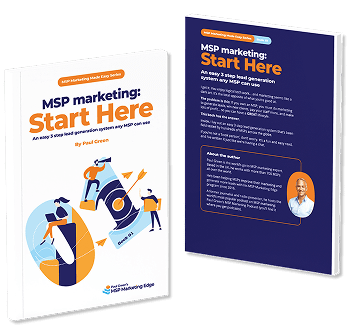
Get a free MP3 of my book MSP marketing: Start Here
when you join 8,000 other MSPs getting my weekly newsletter
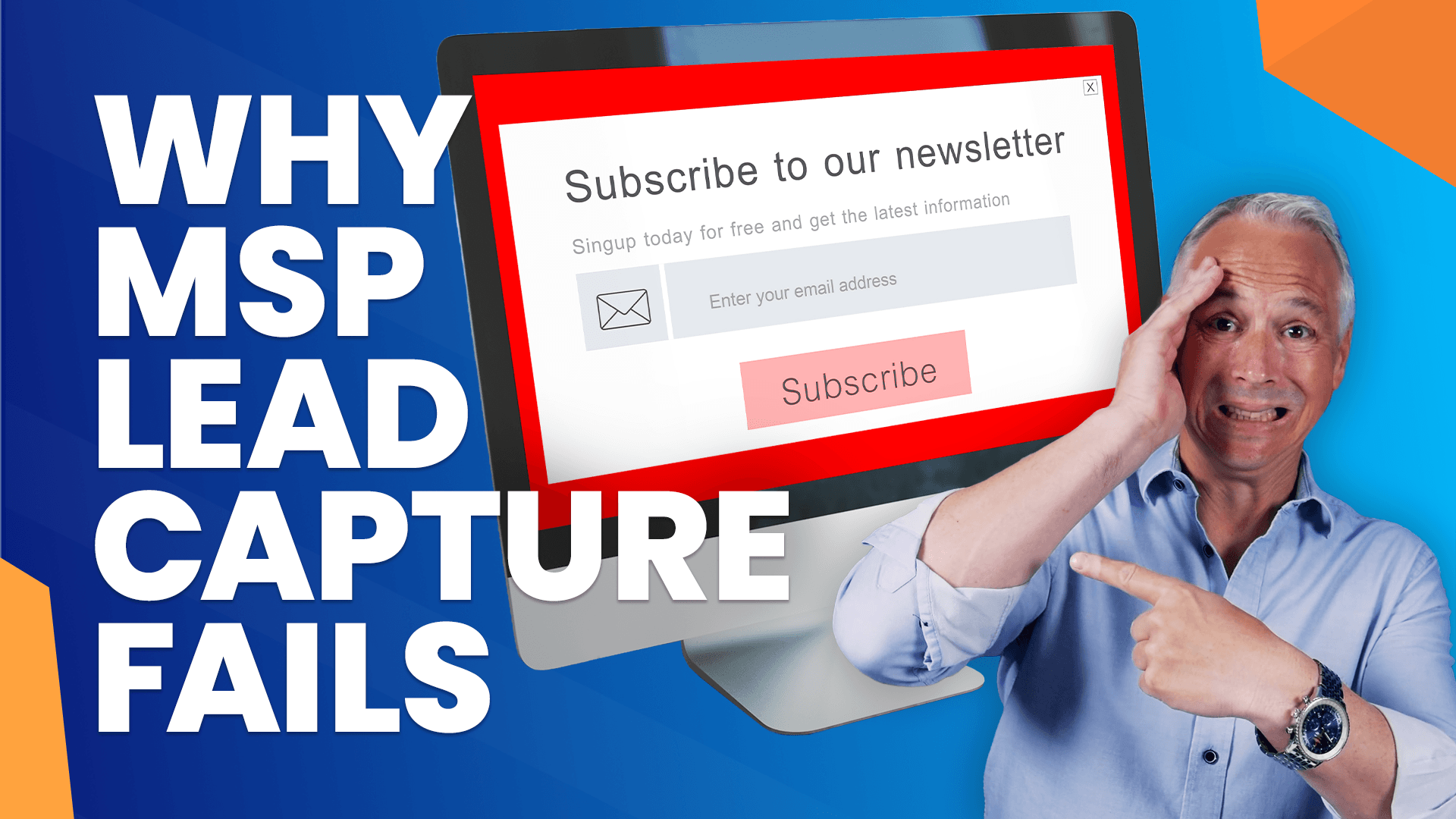
Is your lead magnet being ignored? It’s a common experience for MSPs and today I want to talk about why that happens and what actually works. Also this week, the power of a strong opinion in your marketing, and the fascinating insight of why this MSP sold… and why the buyer bought.
Welcome to Episode 362 of the MSP Marketing Podcast with me, Paul Green, powered by the MSP Marketing Edge.
Best lead magnet for MSPs in 2027
Let me start today by asking you a question… have you ever put something on your website that says “Sign up for our newsletter” or “Get our free guide” or something like that? And then over a number of years you’ve discovered that nobody ever does it. Maybe your mum fills in the form or something, but she’s the only one. No one else does it. If that’s happened to you, then you’re not alone, that’s a common experience for MSPs. And today I want to talk about why that happens and what actually works instead.
What we’re talking about there is something called a lead magnet. You’ve probably heard that phrase thrown around the internet. It’s a common phrase in marketing. And we’re going to talk about the kind of lead magnet that works best for MSPs, not just at the end of this year, but in 2027.
Put simply, a lead magnet is something that you give away in return for someone’s contact details or to start a conversation with them.
That’s the whole concept. It’s not new at all. In fact, the concept of a lead magnet actually predates the internet. It was something that was being done in the 19th century where people would give out samples to start a conversation with people. That’s how old it is. But in the internet age, we give away a thing, a PDF or a physical thing, and we do it in order to get their contact details and then we can do some automated marketing to them. That’s the theory.
However, it’s 2026 and nobody wants more emails, right? If you just say to someone, “Please sign up for our newsletter,” they’re not going to do that. That’s actually not a lead magnet and that hasn’t worked for 20 years because that’s just asking someone to add another task, to get more unwanted emails in their already overflowing inbox. And no one’s going to take you up on that. They haven’t done for the last 20 years. But they will still do it, they will join your mailing list if you offer them something that’s of such a high perceived value that they really, really want it and they will happily hand over their details. And I know this is the case because I’m doing this every single day of the week. And I’ll tell you more about that in a second because I’ve got a freebie for you, my lead magnet. I’m going to give it to you in just a few minutes.
But let’s talk first about the options for you. I’ve been doing lead magnets for around about 15 years or so. So I started doing it really well in my last business and this whole business started with a lead magnet. I built a list by putting a lead magnet out there just to MSPs in the UK about 10 years ago, and that’s how I got this whole business started. So we can talk about what works and what doesn’t work because I have learned this the hard way by doing it. And I’ve generated, I reckon it’s getting on for nearly 30,000 leads over the last 20 years, which is not the biggest number in the world. Someone like Alex Hormosi has generated millions and millions of leads in just five or six years. So I know it’s not the biggest number in the world, but I’ve done it consistently across a whole number of different sectors. So MSPs is just the last sector that I’m ever going to work with in my working career. I’ve previously worked with veterinarians, dentists, opticians/optometrists, and a whole bunch of other business owners, and they all came from lead magnets.
So when you are putting together a lead magnet for your MSP, you’ve got a number of options. And the first of them, is your PDF. It’s the easiest thing to create. I mean, you can use Claude to make it look pretty, or Canva. You don’t even need design skills these days. However, whereas a PDF worked well 10-15 years ago, I believe that for 2027 it’s actually one of the least effective lead magnets that you could ever use because everybody, especially you, has thousands of PDFs sitting in a folder or on your desktop that you’ve downloaded but you’ve never ever opened them. In fact, I said this to one of my MSP Marketing Edge member calls the other week, we have a call every single Tuesday called Tactical Tuesdays, and one of the MSPs actually went and looked and he had hundreds, I forget the exact number, but it was hundreds and hundreds of PDFs that he downloaded as lead magnets, never opened them. So if you give someone a PDF, the chances of them ever actually opening it and reading it are painfully low. And as much as you’ve already got their contact details by giving them a PDF, we do actually want them to consume the lead magnet. Because if they don’t read or consume the lead magnet, then you can’t influence them. Does that make sense? So your PDF is your first option.
Your second option is something physical and something tangible. So that could be a printed book, it could be a wall planner, it could be a guide, it could be something that you send to them through the post. And those three things I’ve just mentioned there are all great options, I’ve done all of those, they’ve all worked very well for me. The physical stuff works so much better than a PDF because it’s real. It sits on a desk, it’s hard to ignore, and I can almost guarantee that no other MSP in your marketplace or almost no other MSP is doing this. So as I say, I’ve given away, it must be getting on for 20,000 of these over the years, and I’ve genuinely built two, million pound a year businesses, off giving away physical lead magnets. And I know that, again, that’s not the biggest number in the world, but that’s a good solid business that runs really well, makes some really good profit. There’s no dramas in either of those businesses that I built, and they all came from giving away physical lead magnets. Sending stuff to people in the post, mailing it to them. I know that’s expensive, I know it’s difficult, and that’s the reason why it’s the right thing to do. So option one is the PDF. Option two is sending out physical stuff. Same information that’s in the PDF, but it’s real and tangible.
Option three, I think this might be the one for you because it is an interactive lead magnet. So you might do something like a quiz or an assessment, and that might give the person who’s filled it in a personalised result. You could do something like a cyber security score, just asking them some simple questions about their setup. Or maybe an AI readiness score or something like that. And all they have to do is answer four or five simple questions, and then at the end they get a report that’s very specific to them. And people love this. It’s a really good thing right now because it’s not generic content, it’s personalised to them. And here’s the clever bit. The questions that you ask can be exactly the same questions that you would want to ask a hot prospect in real life. So let’s say for example, you’re building one around AI readiness. You might ask them something like, on a scale of 1 to 10, how confident are you right now that none of your staff are putting company data into their own personal AI tools? Which of course we know is shadow AI, but the average business owner’s never thought about it. And so the answer tells you immediately how hot that prospect is and what that specific pain point is.
In fact, we use this ourselves. We have a marketing scorecard on our website. You can go and find it at mspmarketingedge.com. Just go into the navigation, you’ll see marketing scorecard. I think it’s under resources, and it works exactly this way. Every answer, just to give you a heads up if you go and do that, every answer you give there feeds into our CRM, HubSpot. So when my sales team, you might fill that in today and then we might have a conversation six months, 12 months down the line, but when they talk to you, they’ve got the answer that you gave when you first filled in the scorecard. So they know your pain points before the conversation even starts. Does that make sense?
There’s another version of this which actually we built specifically for MSPs. If you go and have a look at msppriceguide.com, and I built this with Marcus Sheridan, who’s the author of a book called Endless Customers, which used to be called They Ask You Answer. And he’s built a thing called priceguide.ai. We white labelled that and added in our MSP knowledge to create msppriceguide.com. And that’s about getting your prospects to tell you all about their setup in a way which gives you leads. It generates you leads and also they get a rough idea of how much it would cost to work with you. So I’d strongly recommend that. That is a great combination of a price calculator and also an interactive scorecard, msppriceguide.com. It’s completely powered by AI, by the way. Oh, and they have to give their email address. That’s what makes it a lead magnet. So it ticks two boxes at once. It answers the pricing question that prospects always want answered, but it also captures a lead for you at the same time.
If you go off and build your own version of this, let me give you a super hot tip. If someone gives you their phone number as well as their email, call them immediately, like the second they fill in the form. You get that at 10:01, pick up the phone at 10:01 and two seconds and call them. Because no one hands over their phone number on a lead magnet unless they’re genuinely ready to talk. I promise this. It feels like overkill. it feels like intrusion, but I promise you it’s not. I’ve read a whole ton of research on this. It generates extra sales, not just extra leads, extra sales, if you call someone the second they give you their phone number.
Now, one thing I want to flag to you because it does trip a lot of MSPs up. If you are thinking, “Yep, I like this, I like the idea of a quiz, I also like the idea of doing a physical lead magnet”, don’t use a Buyer’s Guide for this. And this one’s particularly aimed at my MSP Marketing Edge members because for both our memberships, B2B and co-managed, we give you a Buyer’s Guide which we update every year. We delivered the 2027 version in September. A Buyer’s Guide is a very specific tool that’s only for people who are ready to have a conversation now. You never want to gate a Buyer’s Guide, and by gate it I mean they have to enter an email address. That’s what we want for a lead magnet but the Buyer’s Guide is when they’re so much more further down the funnel, when they are ready to start talking to an MSP. So we definitely don’t want to make them give us an email address in order to get a Buyer’s Guide.
Your Buyer’s Guide should always be available for anybody to freely get off your website because it’s a positioning tool and the only people who would read that guide are those who are thinking of switching MSP right now. We don’t want to put a barrier in front of that. Of course, if you do want to know who’s on your website, there’s plenty of software out there that will identify people visiting your site. And of course you have to pay for that data, but it’s not like you’re getting 10,000 visitors a day, right? It’s always worth knowing who has been on your site.
So to summarise, we’ve got three options there. You’ve got your PDF lead magnet, which is easy, but not that effective. You’ve got the same information in a physical lead magnet, which is expensive and difficult, but so much more effective. And then you’ve got your interactive quiz. Those three things, very, very powerful lead magnets for MSPs in 2027.
One final thing that we do need to talk about, and that is traffic. You can have the best lead magnet in the world, but if you are not proactively driving traffic to it, then you’re not going to get people actually giving you their contact details. And that’s a common thing I hear from MSPs. They say, “Oh, I set this up on my website, but no one ever fills it in” and I look at it and it’s actually a really good lead magnet. But then I say, “Well, how are you driving traffic to it?” Because traffic has never been harder or more expensive than it is right now. Go back 20 years when I started my first business 20 years ago, traffic was easy and free or very, very low cost. I mean, it was seriously different 20 years ago. But in 2026, 2027, it is not like that at all. If you need fast results unfortunately you’re going to have to spend money.
Right now, Meta ads like Facebook, Instagram, that kind of stuff, it’s the best place to do that. They introduced something called Andromeda, which was at the back end of 2024. It’s an AI powered targeting and it’s pretty good. We’ve been running Meta ads for about three or four months to a lead magnet and we get a little bit of wastage. I think about one in seven now is not an MSP. So for every seven people that fill in lead magnet on our website, six of them will be an MSP or related, like a reseller or a vendor or something like that. And about one in seven is like a beautician or a dentist. I don’t know where these people are coming from, but we have a mechanism to spot them in HubSpot and get rid of them. So we don’t physically send anything to them and we delete them from our database. So it’s not perfect and it is expensive. I can’t remember quite how much we’re spending, but it’s a few thousand a month.
So Meta is a good place to go and drive traffic to your lead magnet. You do need patience. It takes some time for the algorithm to figure out your ideal audience and you need some budget as well and you need some daily effort, but you don’t even have to do it anymore. There’s an MCP, a connector that connects Claude to Facebook ads. So I run our Facebook ads and I am the least technical person in the business. And if you’ve ever looked at the Facebook ads interface, it’s like, whoa, that’s really difficult. And we’ve got nine different variations of ads running, but I do that with Claude. So every morning I just go into Claude, in the Facebook ads chat and I say, “How’s it going today? What’s happening today?” And what’s cool is as well, because Claude is linked to our HubSpot, it can actually verify the results. So it can go in and say, “In the last 24 hours, these three people have come through Facebook. One of them is a beautician, flagging that up to you, the other two are MSPs.” Isn’t that clever?
There are other things, of course, that you can do to drive traffic, just sharing your lead magnet on LinkedIn, adding it to your email signature, if you’re having direct messages with prospects, mention that to them, put it at the bottom of every blog post you publish, have a call to action on every single page of your website driving people into your lead magnet.
And then the final thing to remember is the single biggest thing that makes any of this work is relevance. The more that your lead magnet, whatever it is, feels like it was written specifically for the exact type of prospect that you want to talk to, then of course the better it will perform. So you need to know your ideal client profile in real detail and use it to turn a generic lead magnet into something that people genuinely want.
The power of a strong opinion in your marketing

Let’s talk about something that terrifies most MSP owners, and that is having a real opinion in your marketing and sharing it with your audiences. Most MSPs I’ve met are naturally cautious people, which kind of makes sense, it makes sense that you’re cautious with your work because you’re there to protect people, sometimes to protect them from themselves.
And so that naturally expands out into the way that you do your marketing and you don’t want to offend anyone or put people off. So your marketing is kind of safe and polished.
The downside of marketing being safe and polished is that it is completely forgettable.
So today I want to make the case for the complete opposite. I want you to have strong opinions or take any strong opinions that you have and put those all over your marketing, and I believe that’s going to make you stand out more.
This matters more than ever right now because as you know, more than most, we are living through an era where AI can generate infinite content instantly, and every business now has access to exactly the same tools. So the ability to create really good content, which 10 years ago, maybe even five years ago, was just sat in the hands of a small number of people who had the resources to pay others to do it. Well, now every business can produce polished, well-structured, completely generic content. But what AI cannot generate is genuine human opinion formed from real experience and held with real conviction. And the businesses that stand out, not just for the rest of this year, but in 2027, are not going to be the businesses with the most content. It’s going to be the businesses, the MSPs with the most authentic, most human, most opinionated content. Being a real authentic human being with an actual point of view, I believe is now a genuine competitive advantage because it’s the one thing that a machine can’t fake, convincingly anyway.
What we’re talking about here is something called the Marmite Principle. Now, if you’re in the UK, you’ll know exactly what Marmite is, if you’re not, let me tell you. Here in the UK, we have a spread called Marmite. I’ve got a jar of it just here, I’m going to open it up and take a smell of it. It is absolutely the most delicious smell. I adore Marmite, I literally genuinely love it. I have it at least two or three times a week on hot toast. Marmite is a yeast extract, in Australia there’s one called Vegemite, which is very similar. There is one in the US, I can never remember what it’s called, but I don’t believe it sells very well. It smells lovely, but it doesn’t sell very well.
Here’s the thing, for years Marmite’s marketing has been around the fact that some people love it and some people hate it. That’s literally their line. It’s Marmite, you either love it or you hate it. And what they’ve done very cleverly is they’ve made people in the UK over a couple of decades have a conversation of, do you love it or do you hate it? And us lovers, we don’t understand people who hate Marmite because it’s delicious. I’m going to have another smell of it. Oh, it’s gorgeous. You know what I’m having for lunch today, don’t you? It’s going to be some Marmite.
Loving or hating a product is not a weakness in their marketing. In fact, I believe it’s some of the smartest long-term marketing that any brand has ever done. They have deliberately built something that provokes a strong reaction. It even gets the people who hate the product talking about the product. How genius is that? They would never have done that if they’d said, “Marmite, you might like it a bit or you might not be so keen on it,” because that’s a very lukewarm thing. They’ve gone right in for you love it or you hate it. Those are two extremes of an opinion. Now, I’m not suggesting that you need to be extreme or deliberately provocative because obviously you’re not selling a yeast extract spread, but you should be willing to be more Marmite.
You should be willing to have people who genuinely resonate with what you say. And the only way to have people who genuinely resonate with what you say is to have people who don’t. And you do that by being yourself and being authentic and actually putting your opinions out there. I do this and I know there’s a tiny sliver of people who don’t like me, and that’s okay. They don’t like me so therefore they don’t follow my stuff, they don’t listen to my podcast or watch my videos, and that’s fine, that’s absolutely fine. I would argue that 80% of people who come across my stuff agree with me and my opinions, and that’s just a guess, but that’s a guess because my audiences grow every year and have done for 10 years. And that’s not me being bigheaded, it’s just a fact that I’ve been sharing my opinions and exactly what I think about stuff for 10 years and my audiences grow all of the time.
It’s good that some people don’t like me and don’t agree with my opinions. And this is something that a lot of MSPs get backwards. If you try to appeal to everyone, you end up appealing to no one. So you can’t be scared of putting your opinions out there and being more you. I promise you, you won’t alienate the vast majority of people. In fact, someone who doesn’t agree with your opinion was always going to be a sucky client for you anyway, because if they don’t like you and they don’t agree with your opinions, but somehow they’ve bought from you, that’s going to be the relationship from hell. So why would you want to attract that person in the first place? Much better that you attract people who agree with you and completely want to be part of what you’re saying because they think what you’re saying makes sense.
And I get why most MSPs don’t share real life opinions. I know you’re worried that you’ll offend someone, you’ll lose a prospect. My view is if you’re the kind of person who alienates people in real life, if you are having normal real life conversation and you alienate people, then of course you are going to alienate people online too. But we are talking about a tiny fraction of people, aren’t we? I’m sure if you think of all the people you’ve ever met over the years and think of someone that you found really weird who alienated you, perhaps someone within the channel, and you can only think of one or two people. Now think about all the MSPs that you’ve met or anyone in the channel you’ve met who you got on with and you thought, “That’s a nice person.” There’s dozens of those, there’s hundreds and hundreds of them.
Most of us do not alienate people in real life. Most of us are thoughtful, reasonable, likable people, but we still have genuine opinions. So we should share those opinions and we should express them and express them respectfully. That’s not going to drive prospects away. That’s going to attract people. Someone consuming a genuine opinion of yours doesn’t think, “Well, I disagree with this person.” They think this person is real, this person is not an AI, they think about things and I trust what they’re saying because it doesn’t sound like everyone else. So the businesses that genuinely alienate people are the ones being needlessly extreme or unkind or divisive for attention, and that is not what we are talking about here.
But what kind of opinions should you put out there? Well, I believe they should relate to your business and your world. If you have really strong feelings about Marmite or maple syrup, let’s go with maple syrup as a more generic example, then that’s not relevant to prospects, is it? Whether you’re talking to business owners or IT directors. However, if you have genuine opinions about things that actually matter to your prospects, then those are the things you should share. What do you think about the use of Copilot within a business? What do you think about AI in general? What do you think about cyber security? What are your opinions on the things that matter to the prospects that you are going to talk to? Those are the kind of things that you should share. What do you think about Microsoft’s direction? What do you think about their pricing changes? What do you think about their product decisions? What do you think about the state of cyber security awareness among small business owners? What about remote work? Do you think remote work is a good thing or a bad thing? What about the impact on IT security? What about the channel? What do you think about the channel, other MSPs, industry trends? What do you think has been over hyped? What do you think is underrated?
Just taking those things there, give an opinion on all of those things that’s a genuine defensible opinion that the prospect you want to speak to, be it a business owner or an IT director, would find a lot more interesting than some of the other content that you might put out there. But just like we were talking about when we were talking about lead magnets, you have to keep your ideal prospect in mind, your ideal client profile, your ICP, and this is where sharing an opinion kind of connects back to knowing exactly who you’re trying to reach. Before you share an opinion, ask yourself, how would my ideal client feel reading this? Would it resonate with them? Would it challenge them in a useful way or would it make them think this person gets my world? Your opinion doesn’t need to universally appeal. It needs to just appeal directly to the specific type of business owner or IT director that you want to work with. Narrow and specific beats broad and generic every single time.
Let’s just finish talking about how to find your opinions because we all have opinions. The challenge isn’t having them, it’s recognising them and having the confidence to grab them and share them with an audience. So if you think about the conversations that you have with your team or your family or with other MSP owners, what do you complain about? What do you get genuinely animated about? It’s those moments, that’s where your real opinions live. If you go to something like ScaleCon or MSP Global or one of the big shows and you’re talking to another MSP owner and you’re having a debate about something, even if it’s a low level debate, that’s you giving your opinions. And what about the advice that you give your clients? Does it go against what other MSPs say or are you particularly passionate about it? Do you regularly find yourself telling a client something that maybe contradicts what other MSPs might say or common industry wisdom? Because what is common industry wisdom, it’s just best practice. There’s no right or wrong way to do a thing, there’s your way and there’s someone else’s way. That’s an opinion and it’s worth sharing publicly.
Think about what frustrates you about the channel, about MSPs. Think about what frustrates you with vendors. Think about what frustrates you with pricing, with clients, all of these things. In fact, frustration is often where the strongest and most genuine opinions actually come from. And then most importantly, when you write about these opinions, you do this in your own words. Please don’t ask an AI tool to generate an opinion for you because the whole point of this is authenticity, right? Getting an AI to do it doesn’t work. What you can actually do is use a dictation app. I use Wispr Flow. I’ve just started my second year with them. It’s a really good app, I’m not getting any financial benefit from this from telling you this. It sits on my Mac, it sits on my iPhone, it sits on my iPad, one app that uses AI to just tidy up what I’m talking about. So I will just sit and talk about stuff for two, three minutes and it kind of tidies it up a little bit. And then, and you could do this, then I put that into Claude and ask Claude to actually restructure that, tidy up, turn it into some actual content.
So the opinion comes from me. I dictate it so I can just talk about it because as you can tell from this, I find it a lot easier to talk about stuff than I do writing stuff, and then I use AI to help me shape my opinion, but the opinion is definitely mine. So your opinions, they’re one of the last genuinely unique assets that you have left in a world where anyone can generate polished content in seconds. They can generate polished content, but they can’t generate polished opinions. Be Marmite. Say what you actually think and make sure it’s relevant to the right people and they are going to listen to you.
Members’ Update
If you’re an MSP Marketing Edge member, there are two things sitting in your portal right now that work brilliantly together, and I want to make sure that you’re using both of them. So the first is our website framework. This is the exact structure and template that we recommend every member builds their website around. And it covers everything from your homepage headline, to social proof, to your call to action. It’s built specifically for how business owners or IT directors, because we have two different memberships, it’s built on how they actually read and decide, not how you think they read and decide. So we’ve got that website framework there, you can access that right now.
The other thing then is every month I do a website review. So I go through one of our member’s websites live on video and I judge it against the framework. You can see why I would do that. So it’s me showing in real life, here’s the plan of attack, here’s how well your website measures up against that plan of attack. And then of course I give specific suggestions on what to change and the goal is to generate more leads and get more discovery calls. Each of these website reviews runs about 20 to 25 minutes, which sounds like a lot, but it’s a real in-depth one, not a quick skim. And of course, if you are a member, you can enter the prize drawer. You only have to enter it once and you’re in that prize drawer forever. So the earlier you enter, the more months you’ve got a chance of being picked. If you haven’t entered yet, log in now, just go into tools in the portal and you’ll find website reviews in there.
And if you’re not yet a member, as I say, we have two memberships. We’ve got B2B, that’s our most popular membership, it’s the one that’s been running for nine years that helps you win more business owners as clients. Then we have our new one, co-manage, which launched, I think it was earlier this year, and that’s for winning IT directors, but each of them is only available to one MSP per area. So you can check if yours is available without having to contact us, you can just put your postcode or your zip code or your area in depending where you are in the world and see for yourself if it’s available. Go to mspmarketingedge.com/membership.
The fascinating insight of why this MSP sold… and why the buyer bought

Featured guests: Simon Pronk, founder of 777 Networks. In the world of technology, Simon turns business needs and ambitions into practical IT reality. He wrote his first program at the age of eight and later graduated in Economics. After holding a range of financial roles in both large enterprises and smaller companies, he specialised in ERP systems.
In 2003 he founded the managed service provider 777 Networks. Over more than two decades he has built a reputation as a superb technical engineer, delivering business IT excellence to SMEs across the UK and internationally.

Arjun Shastri, co-founder of Kingsgate. Arjun leads Kingsgate’s strategy and finance efforts. He brings a decade of experience investing in public and private equity, and is passionate about applying a rigorous, people-first approach to new companies.
Prior to Kingsgate, Arjun was a Partner at Untitled Investments, a New York hedge fund spun off from Tiger Global Investments, and a private equity investor at Hellman & Friedman. He began his career at McKinsey & Company, advising Fortune 1000 companies on growth strategy.

When do you want to exit your MSP? Even if it’s years in the future it’s kind of something you’re looking forward to, right? Because when you do sell it, it’s going to be the ultimate validation of all of the years and years of work that you are putting in right now. And I’m guessing that of course you’ll want to sell it for the highest amount, but also sell it to someone who’s going to look after your baby because as business owners, and I say this as someone who sold his first business 10 years ago, having someone that looks after your legacy, it’s a really important thing when you exit your business.
So right now I’ve got a unique interview for you. I’ve got an MSP who sold his business and also the guy that bought the business from him. And they’re going to reveal both sides of that sale, why they picked each other and how you can maximise your exit when it eventually happens.
I’m Simon Pronk. I was the owner of 777 Networks, a company that I started in 2003 in my bedroom and sold recently to Kingsgate.
Hi, I’m Arjun Shastri. I am the founder of Kingsgate, and I now work closely with Simon and the 777 team.
I love it. We have both sides of a very exciting transaction on the podcast. I think this is possibly only the second time we’ve ever done this. Simon, you built up an MSP and you sold it. And Arjun, you bought that MSP and we’re going to explore today why you bought Simon’s business, what made it attractive to you. Simon, what was in it for you to sell your business to Arjun? And of course, what we’re hoping is for the hundreds and thousands of MSPs who are listening to this or watching this on YouTube, that they can figure out how to make their MSP more valuable when they come to exit. So thank you both for coming onto the show.
Simon, let’s start with a little bit more about your story. And you just said that you started in your bedroom and I know that’s a thing that founders say, isn’t it? But you did literally start in your bedroom.
Yeah, I did. Back in 2003, we had dial-up internet. I worked for an MSP prior to me starting my own business. But yeah, for sure the first day and the first year was spent actually in my spare bedroom with a dial-up modem doing remote support for people with servers.
How do you do remote support over dial-up? There’s a whole bunch of people listening to this too young to remember that. How do you do that?
You do it slowly is what you do, but you still don’t have to go in your car and drive there, so it actually does work. It does solve the problem.
So even in 2003, that must have felt like the far off future, you probably had no concept of how it’d be today.
That’s it. I mean, as internet speed sped up, everything got much better. But, I think the traditional way prior to us doing that was, “Oh, we’ve got a problem, come and see us”, in the van we got and that could be hundreds of miles. And as soon as we were able to do remote access over modems, then it made life a lot easier. And it just improved as broadband improved.
I can imagine very different business model. And you and I sound like a couple of old guys. We’re talking about modems and stuff now, so we’ll move on. So obviously that business didn’t stay as just you in your bedroom. So you’d been running it around about 22 years, 23 years when you exited. Tell us about the growth story.
So initially really it was an operation from my bedroom and we grew the business via word of mouth. My way of approaching things was always to do a great job for people, and that was felt by the first customer who then recommended to the second customer who then recommended me to the third customer and off it went. And that’s pretty much how we grew over the years. As we got busier, I added people to it. But the ethos was always the same. We’re a quality and customer experience first business, let’s say. And yeah, we grew very much by recommendation. We didn’t do any marketing until much later or more recent years really. We were quite lucky to have known the people we’ve known and meet the people we’ve met over the time.
Yeah, that sounds amazing. I’m just going to gently ignore the fact that you grew it on referral because as much as that’s a great way to grow, it’s obviously the least proactive way to grow. What kind of size of business did you get to at the point you were thinking about exit?
The exit thing really started a few years back, probably five years ago. I ran into an old colleague of mine and we were just talking and he asked “What’s your plan for the business?” And at that point we were doing probably about one and a half million, something like that. And he said, “Why don’t you try and actually work at this more than we had been?” And up until that point I hadn’t really considered it. And then a number of things happened and number of discussions at home and stuff like that. And we embarked on a growth strategy. And when we eventually sold, I think we were 3.5 million. So we did very well really.
That’s amazing. So Arjun, I’m going to come to you in just a second. Simon, I’m going to out you now on the podcast. It’s the first time I’ve ever outed anyone in that I know you have a family. And the reason I know this is just before the interview, you were telling me how on holiday with your family in Greece, you accidentally missed the flight. And you’re staying behind in Greece enjoying your holiday while your family have flown home. So we can all see through that, Simon. We know exactly what happened there. The reason I mentioned your family is there’s a lot of MSPs get to between a million and two million in revenue. And that conversation when you go home and you say, “Oh, actually, I think I can double it.” And often your life partner, be it wife, husband, boyfriend, girlfriend, whatever, and your kids are going to be massively affected by that. In fact, I would argue they’re more affected by you choosing to throw yourself in and get up to the next level than if you were to say, “Actually, I’m going to sell it and I’m going to do something different.” So how did that conversation go?
Well, it didn’t actually. The way that happened is I was always pushing. And the reality of it is that in my business and the way that I pushed hard to make the business work, actually there was a lot of downside for my family. There was a lot of hours that I wasn’t there, a lot of days that I wasn’t there. And it was a lot of, let’s call it hardship really and testing relationships. I’m very lucky to have the best wife I could ever hope for who has supported me through the really, really difficult stuff and through the good times too, obviously. And without her, I wouldn’t be here. In fact, that’s the reality of it. But it is very challenging. And when you start from a bedroom what you don’t learn and aren’t given instruction on is time management, prioritisation, all this sort of stuff that happens and also handling a family around you. So that’s something that I learned the hard way, but it’s something that came over time really. There wasn’t a conversation that said, “I’m going to push now and it’s going to be like this.” It didn’t work like that. It was we pushed first and the effect was felt afterwards and we did have some conversations along the lines of, “Is this really what you want because we don’t see you much?” So that’s how that went.
Yeah, that’s interesting, thank you. And I think there’s a lot of people listening to this or watching this will relate to that because this is what we do as business owners, isn’t it? We throw ourselves into it, we give it everything, and then we look up and it’s like, oh, 20 years have gone by. The kids are suddenly this age and I’ve been married this long or whatever is the case. And as business owners, we take our business with us everywhere. And that means when it’s good, we are good. When it’s not so good, we are not so good. And that’s a common thing.
So Arjun, let’s bring you into this. And obviously you are a founder as well, you have your business, but your business is a little bit different, it’s not strictly an MSP. You obviously are acquiring MSPs and building, I guess. Is the goal to build a big supergroup here in the UK?
Something along those lines. I don’t know about supergroup, but a good group maybe is how I’d describe it. We approach it in honestly quite a simple way, but a way we think is a bit different and hopefully the right way to go about things. I think the thing in our business that is an easy thing to forget is just how important the work that we and our companies do really is. Our teams are heads down every day working hard, and MSP work can be stressful. And it’s easy to forget the fact that all of our work is in service of something really, really important. Our companies are not necessarily famous and well known, but some of our customers are. They do healthcare work, keeping people healthy. They do specialty manufacturing work, keeping important industries going. They do infrastructure work, making sure highway repairs happen and things of that nature. And if we aren’t doing our jobs every day, our customer’s IT goes down and they’re not able to do all these things that are important, not just for themselves, but for thousands and thousands of people. And that’s actually what attracted us to the industry to begin with.
I spent most of my career as a principal investor in the IT world, but the reason to really dive in and really paint the vision we have at Kingsgate was to work with companies doing that kind of work, but doing it really well, having real customer success, building really long relationships. We’re people businesses at the end of the day, so to do all of those things, you need a really strong team that’s really cohesive and motivated and satisfied. And those are exactly the things that Simon built over a really long period of time, and we’re just fortunate we get to work with them going forward. I say that whole rambling thought piece because we are business buyers, but we buy with a very simple philosophy of we’re working with companies that are doing all those things and doing it really well, that’s why we want to come in and be involved. But our first duty above everything else therefore is to keep those things as they are.
In building a group, we’re trying to take advantage of best practices that different companies have.
Simon does things that are very differentiated and unique that he can help others in our group with. We can do a few other things with scale to help our teams, things like optimising distributor relationships, stuff that’s purely scale economics related. But when it comes to the real nuts and bolts of delivering great customer service, our teams who’ve been in place for a long period of time that know how to serve their customer as well, that’s what the 777 team and Simon are so great at. And we really try to emphasise preserving all of that, and that’s the spirit in which we’re building our group.
Yeah, and it’s a really great thing to hear. And I say this as someone, I sold my first business in 2016 and the new owner dismantled much of that business and it went into liquidation at some point in the future. And I wouldn’t appear on a podcast with him. And I know I’d put 10 years of my life into that, and I understand that when we sell a business, we’re not just exiting the day-to-day and we’re not just exiting and taking some money that we’ve been building up. We also want that legacy. And I didn’t know that until that business ceased to exist and became absorbed into, there’s still little bits of it left in another business. So yeah, it’s amazing to hear that you’ve got that approach and it makes sense. Why would you take 20 odd years of someone else’s hard work and dismantle it versus taking their best practice and saying, “Right, what’s the very best we’ve got from all these businesses we bought?”
What would be really helpful for all of the MSPs listening to and watching this is, could you give us a brief, almost like a bullet point list of the things about Simon’s business that made it attractive to you? So you’ve talked about the longevity, the quality, the customer service. What are some of the other things? And I’m almost looking to create a list for our listeners and viewers of practical things that they should be thinking about up to four or five years before they think about exiting the business.
Yeah, absolutely. None of this is going to be rocket science, but there are things that Simon just did a fantastic job with. What are the things you need to have a truly successful business in general, but specifically in the MSP world. You need a really high quality team. So we typically are looking for companies with not just a strong team in place, but one that’s been in place for quite a while and the employees actually have history, not just with each other, but with the customers and all that knowledge really lives at the company. That is something we do notice being a big difference in the MSP world. It is an industry where some companies have a higher turnover of employees and we just think long tenured teams with real strong customer touch points, history with them is a huge difference maker.
The other is just what does your customer base look like? So the thing that’s so great about Simon’s business, for example, is it’s a highly diversified customer base. He has a large number of customers, but there are certain things that tie them together. Simon at the risk of oversharing, Simon built a really strong niche in serving customers in the kind of heavy industrial industry, guys doing really big work with really big machines. They have very specific needs. They have very specific software systems they use that they’ve typically been running their businesses on for 20 years. Clarifying them and bringing them into the modern age is not the simplest thing on planet earth and only a few people can do it. So the company really has some specialised, not just specialised skills, but specialised success stories that they can advertise, and that’s been just a really powerful driver for the company.
And the last thing I’ll say, which is not mutually exclusive with my last point, is the relationships that Simon had with his customers are truly built on critical work. Simon, I think it’s fair to say you’ve prioritised from the early days of your business taking on the most important challenges for your customers. And in most cases, I think in pretty much every case, you actually take care of every single piece of IT for your customers. And that goes all the way from making the big strategic decisions on what your IT footprint should look like for the next 10 years, how you should protect yourself, your cyber security posture, all the way through to what piece of hardware should you buy next week? And that’s a very different form of relationship than an IT company might have if they are more augmenting an existing IT team that a customer has and doing niche bits of spillover service.
Simon’s business is built on the most critical work for his set of customers, and that more than anything is what’s really powerful because if you’re doing the most important thing for your customers, that’s how you have the strongest relationship, that’s how you build success together and real loyalty to each other. So I think those things, they’re not uniform across the MSP world. It’s not like every company would fit that description. I do think many would, but Simon did it to a really high degree and that’s really what got us excited and hopefully that paints a bit of a picture of how we break things down.
It does. Thank you. And what you’re describing there is a moat business and anyone who follows Charlie Munger, he isn’t here anymore, but Warren Buffet, a lot of their investment criteria is what’s a moat? So for example, those guys invested in Coca-Cola because there’s a thousand Colas out there, but there’s only one Coca-Cola. And Coca-Cola has a hundred-year-old brand that will never be beaten. Pepsi might have a good go, but Coca-Cola is something different. And I think what you’ve described there is that Simon had created, whether by accident or whether by cunning strategy, you’d created a moat MSP. So your customers are much less likely to go off to another MSP, a) because they don’t have the same functionality, and b) because they don’t have the same relationship. Now, Simon, let me just ask you a follow-up question and we need to just wrap things up. Obviously, you sold the business, but you are here on a podcast with the guy that you sold the business to. So are you still working in that business running it, or are you still working alongside Arjun? And what was your thinking in that? Because I guess you had a choice to walk away or to stay.
I built a business based on being a custodian of somebody else’s cash machine. And what Arjun described previously was a full service IT, a full IT managed service, if you like. And with that came an element of trust, and that’s an everyday thing, so relationships are important. But when we ultimately decided that we would sell a business, we met with quite a few buyers. And having also seen acquisition go wrong a number of times in our industry over the years, over the last 15 years, that’s happened numerous times, and we’ve picked up a number of clients when that had happened around us. Very conscious that choosing the right buyer was super important, irrespective of the money. Our business was built not on how much profit can we make, but how can we serve? And if we can serve properly, we’ll automatically make profit. And we have built a business like that.
So when it came to choosing a buyer, we met with a few people and then I met Arjun, and then I met with a few more people after that. And as soon as I’d met with Arjun, I said to my wife, “If I had sell this business, I’d really want to sell it to him actually, because there’s just a connection. Our values are the same or similar in many ways around this topic.” And I think that yes, money is one thing, but knowing that the relationships that you’ve built are going to be kept and looked after in the same way by someone is very important. But equally, as a seller of a business, we wanted to ensure the very best experience, my mum was involved in the business too, and the very best outcome for somebody taking it on.
I said on day one, Arjun and his father, James, “We’ll work with you until it’s right. That’s how it’ll be. And when we’re done, we’re done. That’s it.” And I think that there are certainly people that we met with and certainly people we know in the industry who we would’ve sold the business and just walked away because we didn’t want to work with them. But these guys are different, that’s the truth of it. They have a different approach. They’re very much in tune with where we are with, don’t worry about the money, it will come, just worry about the service. And I think that’s where we connect and that’s why I will continue working with these guys however long that might be.
That’s a great answer, thank you so much. I’m going to ask each of you the same question just to finish, and I’m literally looking for a 10-second answer. Arjun, I’m going to start with you, which is for an MSP listening to this right now thinking, actually, yeah, an exit, it’s coming up, even if it’s a couple of years down the line. What’s the one short piece of advice that you’d give to them?
I would really reiterate what Simon just said. Find someone whose values align with your company because you or your team are going to have to work with them going forward. And we’re a relationship business at the end of the day, so keep that top of mind.
Great answer. Thank you. And Simon?
Yeah, it’s almost the same. I would say that don’t be in a rush to sell. There are loads of purchases out there, but just you’ll reflect on it. Each person listening to this will reflect on it the same way. They’ll have built relationships over the years, and it really comes down to finding the right buyers that will make sure that that continues. And there are loads of buyers out there that you don’t have to sell to.
Yeah, absolutely. It is definitely a seller’s market in managed services right now. Thank you both for being on the show. We had a lot of drama behind the scenes. All my bad. I had a technology fail when this is a second attempt at doing this, and you guys have been absolutely great and so gracious with your time. And Simon, I can see why you forgot to get on the plane home. You could claim it was just for this interview, which is fine. Simon, for any MSP that’s listening, wants to get in touch with you, just tell us how to find you on LinkedIn.
Yeah, I actually don’t know how to find myself on LinkedIn, I don’t use it too much if I’m honest. But yeah, I’m there. Simon Pronk, 777 Networks. You’ll find me, connect. If you really want to speak, just ping me on there and I’ll get you my personal email and phone number. But I’m happy to talk to others about it. I was lucky to have been introduced to another MSP owner by these guys, and there’s some really interesting conversations that came out of that. So yeah, happy to share whatever I know.
Yeah, it’s the greatest social proof, isn’t it, to speak to someone who’s already done the thing that you’re thinking of doing. Thank you. And Arjun, again, what’s the best way to get in touch with you guys, either for MSPs that have got questions about this today or maybe even want to start that early conversation of is this something, a possible acquisition? Could that be something you’d be interested in?
Yeah, absolutely. I can be found on LinkedIn. So if you take a look at Arjun Shastri and Kingsgate, you’ll find me on LinkedIn. I’m also at arjun@kingsgateent.com. And you can also find me directly through our website. We have a little email form that you can reach me through. We’re constantly looking to speak with the best operators out there. So for any of your listeners, please do reach out anytime.
Useful Links
- This podcast is powered by the MSP Marketing Edge, the place where 700+ MSPs generate leads, win clients & achieve freedom.
- Join me in MSP Marketing Facebook group.
- Connect with me on LinkedIn.
- Connect with my guests, Simon Pronk and Arjun Shastri, on LinkedIn. And visit the Kingsgate website.
- Got a question about your MSP’s marketing? Let me know.
Get a free MP3 of my book MSP marketing: Start Here
when you join 8,000 other MSPs getting my weekly newsletter
Inside, I’ll reveal the four biggest obstacles blocking your lead generation and the simple 3 step system that overcomes them.
Buy it now on Audible.
Or in the next few minutes when you start getting my email newsletter.
Discover the marketing used by successful MSPs to generate leads & win clients
Every week I send out a FREE 5 min MSP marketing win. Smart ideas used by hundreds of MSPs to generate leads and close prospects.
Sent weekly on Fridays. Unsubscribe any time.