Paul Green
/
November 26, 2026
Get a free MP3 of my book MSP marketing: Start Here
when you join 8,000 other MSPs getting my weekly newsletter
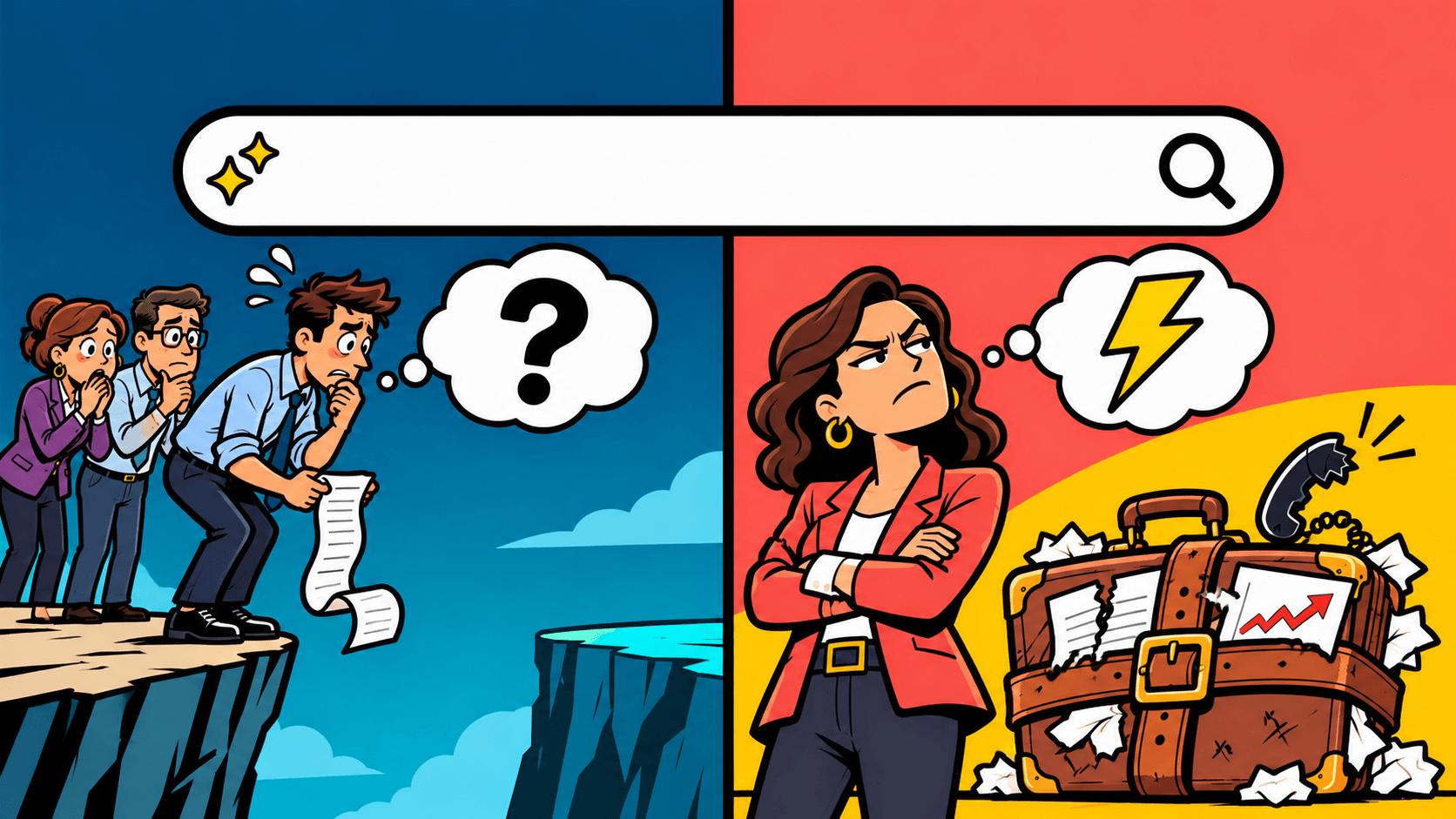
Two business owners are searching for a new IT company today. One has never had an MSP, while the other can’t face being let down again. They need completely different marketing from you... and one of them is a much easier win. Which one do you think it is?
Imagine two business owners briefing their AI or typing “IT support” into Google on the same Thursday morning.
They might be typing very similar words into very similar screens. But inside their heads they couldn't be further apart.
- One has never had a proper IT partner and is nervous about taking the leap away from what they think of as Pay As You Go (and we know as break/fix)
- The other is in a pay monthly contract, but has been let down before and is bracing for it to happen again
If your marketing talks to both of them in exactly the same way, it's not going to help you attract either of them. Let's look at these two completely different types of buyers and how you can persuade them to talk to you.
The first timer: Making a big jump into the unknown
This is not a one-person business. This is a business with staff, but they've never quite been persuaded to get into a managed services contract. So they're still using a break/fix service whether it's appropriate or not.
Something breaks, they ring someone, it gets fixed, they get a bill. Simple. They understand it. They have no idea that they're missing out on vital proactive preventative work, a startegic overview and someone who's "got their back".
From where they’re standing, moving to an MSP is a huge jump. Signing an agreement, and paying money every month whether work needs to be done or not.
It sounds expensive, and a bit like being sold something they don’t understand (and perhaps don't feel they need)..
So they think: Why would I pay every month for something that isn’t broken? Am I about to be ripped off?
Even if they are persuaded that signing an MRR contract is the right thing to do, first timers rarely upgrade with the break/fix company they already use, even when that company sells both. It’s notoriously hard to do.
It's something to do with the psychology of how they think about a break/fix business versus a proper MSP. Pigeonholing is going on here.
That means if they're in a break/fix relationship with someone else and they talk to you, you have to do all of the educating.
Explain, in plain English with zero jargon, why an ongoing relationship beats a repair shop. With break/fix, it breaks and you fix it, and nobody looks at the bigger picture.
In a managed contract with you, they get someone who has their back, is proactive, and who takes a strategic view of where their technology is heading.
The switcher: Carrying a load of baggage
For this person what's going on in their head is completely different. The switcher already knows what an MSP is, meaning you skip the education.
But they’re carrying emotional baggage. If they're already thinking of switching MSPs, then they've probably suffered from poor service, price rises, and have a list of 112 small frustrations with their current MSP.
Ordinary business owners and managers make emotional buying decisions based on what's happened to them before. A switcher is acting off the frustrations they have with their current MSP.
The scary part is going through all of it again. They wonder whether the new guys will be any better (or whether all MSPs are the same), and how painful the move will be.
That’s the flip side of what's called inertia loyalty. People put up with an awful lot before they finally leave, so when they do move, there’s a mountain of frustration behind their decision.
Your marketing has to acknowledge that. Show them you understand what went wrong, and demonstrate that the move will feel safe.
Then talk about strategy. While everyone else promises fast response times, a strategic view of their business makes you look different immediately.
If you really want to understand what's going on in their heads and their hearts, think of a time that you've switched suppliers. But importantly think about when you're buying something that you don't understand.
Why did you pick your last dentist or your mechanic? if you don't know much about dentistry or car mechanics, you didn't do it because of what was going on in your head. It was all about the emotional frustrations of your previous supply. This is exactly the place you need to be in to understand how prospects are feeling.
Chase the switchers first
If you're looking at those two types of buyers, then I would go for the switchers first. They are the easy win, because they already understand the value of managed services. So you skip the education and the conversation starts halfway through.
It’s shorter, easier and faster. You're focused on trying to persuade them to pick your MSP rather than teach them what managed services is all about.
You should still target first timers, sure. But they need far more explaining, far more reassurance and a lot more patience before they say yes. A switcher is already on the move mentally and emotionally, and is looking for someone to trust.
How to market to both without doubling your work
You never know which one will turn up, so you need to be ready for both. Good news! You don’t need two sets of marketing. You can adapt the same assets for each group.
1) Build an interactive quiz. Ask one question up front: are you picking your first serious IT company, or switching from someone else?
The answer tells you which conversation you’re going to have before you’ve said a word.
2) Split your FAQs page. Give the first timer “why would I pay every month when nothing is broken” and “what exactly am I getting for the money”. Give the switcher “what if you’re the same as my last provider” and “how does the move work”.
You answer the worry in their heads and hearts before they ask.
3) Write 2 case studies, one for each group. One is a business that made the jump to its first proper IT partner, and the other is a business that switched and wished it had done it sooner.
Each reader sees their own situation reflected back at them.
4) Choose your words carefully. I would never use the terms break/fix or managed IT with a prospect, because they’re your words, not theirs.
Talk about their first serious IT company, or someone who has their back.
5) Ask 2 questions on the discovery call. Who looks after their IT at the moment, and what has their experience of them been like?
Their answers tell you whether to educate or reassure.
What questions do you have on this? Let me know. I read and reply to every single email.
Get a free MP3 of my book MSP marketing: Start Here
when you join 8,000 other MSPs getting my weekly newsletter
Inside, I’ll reveal the four biggest obstacles blocking your lead generation and the simple 3 step system that overcomes them.
Buy it now on Audible.
Or in the next few minutes when you start getting my email newsletter.
Discover the marketing used by successful MSPs to generate leads & win clients
Every week I send out a FREE 5 min MSP marketing win. Smart ideas used by hundreds of MSPs to generate leads and close prospects.
Sent weekly on Fridays. Unsubscribe any time.