Paul Green
/
June 11, 2026

/
RSS Feed
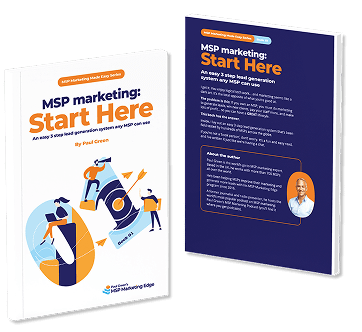
Get a free MP3 of my book MSP marketing: Start Here
when you join 8,000 other MSPs getting my weekly newsletter
MSPs must build audiences and relationships before selling IT support, which is why marketing is so important. Also this week, why technically superior MSPs lose deals to “average” competitors, and how MSPs can build resilience every day.
Welcome to Episode 344 of the MSP Marketing Podcast with me, Paul Green, powered by the MSP Marketing Edge.
Every MSP is now a media & marketing company
I want to start today with something that landed in my email inbox a few weeks back from a guy called Tom Orbach. Now, he writes a newsletter called Tom’s Marketing Ideas. I’ve been a paying subscriber for a while. He’s sharp, he’s very original and when he says something, I really do pay attention.
Now, the subject line of his email was this… Every company is now a media company. And after I read the newsletter, I just couldn’t stop thinking about it because I believe he’s absolutely right and I believe it matters enormously for your MSP. Let me explain what he wrote about and then I’m going to add my own layer on top of that.
So Tom’s argument started with a data point. It was about OpenAI and how they’d recently spent over $100 million to acquire a podcast, which is kind of weird if you think about it because they didn’t acquire another technology company or any kind of software platform, they spent all that money on a podcast. In fact, it was two guys who’d been doing a live tech show for just 17 months. And then the week before that, a fintech company called Plaid, which by the way is worth $8 billion, they bought a newsletter with 200,000 subscribers and actually Tom listed company after company after company that have done the same thing.
HubSpot bought a newsletter with 2.5 million subscribers. Stripe bought a founder community. Semrush, which is an SEO tool, they bought several SEO publications. And these are not media companies, these are software and technology businesses, but they’ve all been spending hundreds of millions of dollars to own audiences. So before we explore why, let me first of all just put something out there to the universe. If there’s any business that wants to come and buy this podcast for let’s say $100 million, then please email me. Obviously I’m joking. (I’m not joking. Email me.)
Anyway, let’s look at why all of these big businesses are doing this and why even though these are big businesses buying podcasts and newsletters and stuff like that, it’s still relevant to you as an MSP. They’re doing it because they figured out something that most businesses are still catching up to. In a world where AI can produce infinite content at practically zero cost, the one thing that can’t be replicated is a trusted human voice with a loyal audience. Attention is the scarcest resource in business right now and the companies that own attention don’t need to chase customers anymore. The customers come to them. Tom Orbach in his newsletter puts this brilliantly. He says,
“The company that teaches about the industry earns the right to sell the tool.”
And that sentence is basically the entire philosophy behind what I do with this podcast, with my LinkedIn newsletter, with my weekly emails, with all of my content. I’m not really selling my MSP Marketing Edge membership. I’m building audiences of MSPs who trust me. And when they’re ready to take their marketing seriously, I’m the person they’re going to think of.
Now, here’s where this is applicable for you because the good news is you don’t need to spend $100 million on a podcast network, but you do need to think of your MSP as a media company. And what does that mean in practice? It means you should be publishing content consistently. Something that educates the business owners and managers that you want to work with. At the very least, a weekly email, a weekly LinkedIn newsletter, a short video, ideally every week or every month, a blog post every week. And not all of these at once. Pick one or two, do them consistently, do them week after week after week and then systemise them so someone else is doing the hard work on your behalf.
I write this podcast and I read this podcast and my team do all of the rest of the work, and believe me, they do a lot more work on this than I do. But you would do this because the business owners in your area are out there already consuming content every day. And the question is whether any of that content is coming from you. If it’s not, they have no relationship with you. And when the day comes that they’re finally ready to switch from one MSP to another, if you’re not out there with your content and they’re not consuming that content, you’re not there in their head and in their heart someone else is.
And you know there’s something else that Tom Orbach says that I want to reinforce? He says that in 2026, every company has access to the same AI tools and can now publish endless content at almost no cost. And every company blog now reads kind of the same. 2000 words are very well structured, SEO optimised, annoyingly forgettable content that sounds like it could have been written by anyone about anything. And do you know what? People can feel this. They are drowning in slop and they are hungry for something real. A human who actually works in the industry has real actual opinions, who tells them what’s happening and what to pay attention to. That is the opportunity for you.
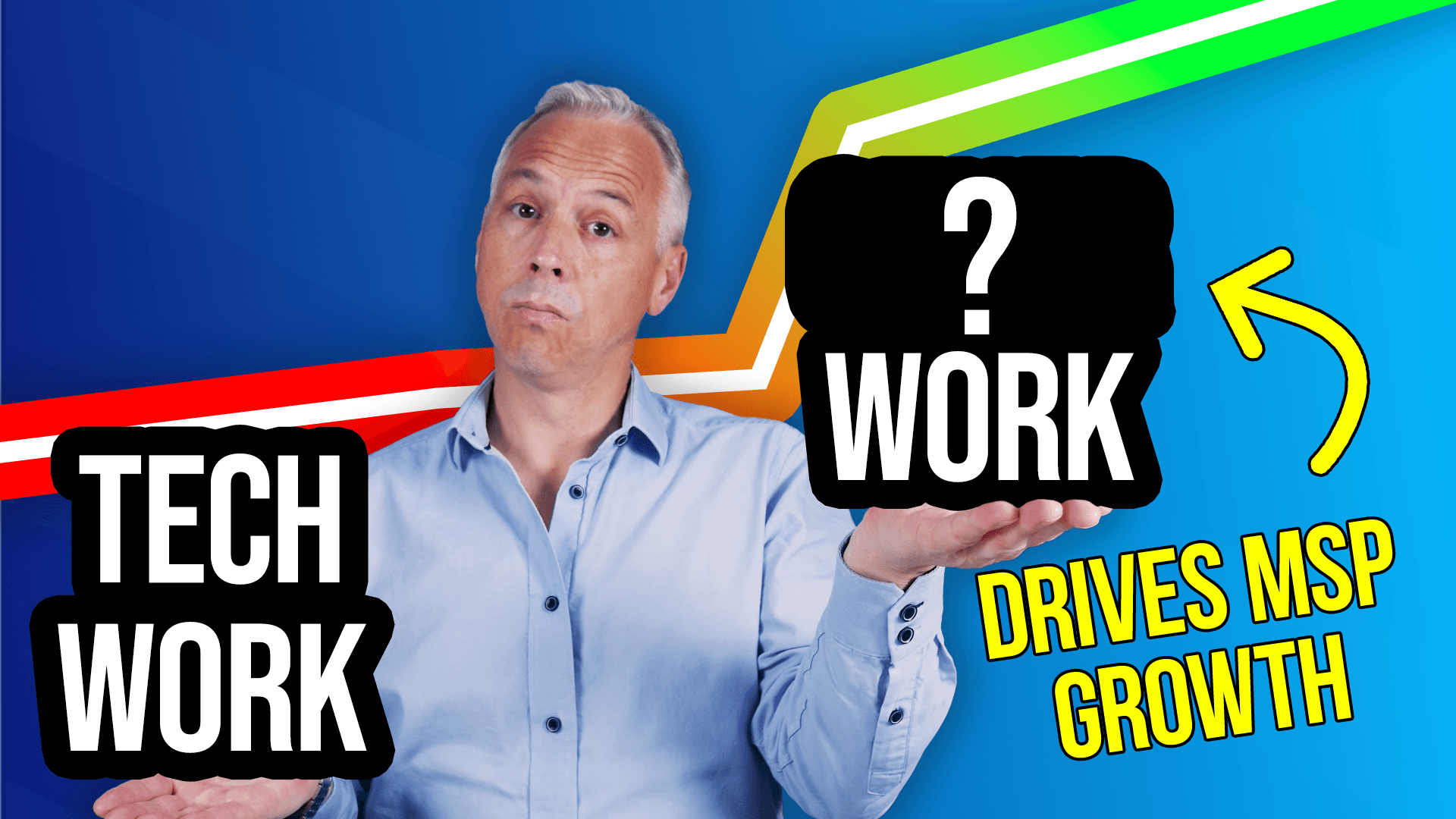
And it connects to something that I believe very deeply about, which separates the MSPs that grow from the MSPs that stagnate, because here’s the second part of what I want to say today, and it’s something that I’ve observed of many, many, many years working with MSPs all around the world. The most successful MSPs are not the most technically brilliant ones. They’re also not the ones with the best tech stack or the most certifications or the slickest operations. The MSPs that grow the fastest and the most consistently are the ones where the owner has made a fundamental mindset shift. They’ve stopped thinking of themselves purely as a technology business and started thinking of themselves as a marketing and growth business that also happens to deliver excellent IT.
And that sounds like a subtle difference, but it really isn’t. It changes everything about how you spend your time, what decisions you prioritise, and what kind of business you end up building. When you’re running an MSP that’s primarily focused on operations, your whole day is consumed by tickets, clients, staff, vendors, firefighting. Marketing is the thing you’ll get round to when all the other things quietened down. And things never quieten down, do they? So marketing never happens.
When you’re running an MSP that’s a marketing and media company first, you protect time every single day for the activities that grow the business. You treat your weekly email as non-negotiable. You treat your LinkedIn presence as a business asset, not something you’ve got to do. And you end up thinking about your audience, your message, and your pipeline in the same way you think about your SLAs and your response times. All of these things matter, but in most MSPs, only one of them gets proper attention.
Tom Orbach, the guy that writes the newsletter, he’s right. Every company is now a media company. And I’ll add to that that every MSP needs to become a marketing company as well, those two things together, not instead of being a great service provider, but alongside it. The MSP that teaches, that shows up consistently, that earns the trust of its local market through content and personality and genuine helpfulness, that MSP does not have to chase clients. Clients find them. And trust me, that is a very different and much better business to own and run.
Why technically superior MSPs lose deals to “average” competitors

Can I say something that might make you feel a little uncomfortable and a little not particularly humble, even if it’s actually true? Technically you are probably better than some of your competitors. Do you agree with that? Maybe your tech stack is stronger, maybe your people are more capable, maybe just your systems and processes are more robust. And yet, despite all of that, every single day some local businesses choose another MSP instead of you.
And so the question that should be keeping you up at night is this. Why? Why are they picking MSPs that technically aren’t as good as you? What on earth is wrong with these people? Most MSPs assume that the answer is to keep improving the service, so better tools and processes and delivery, all of that kind of stuff. And while all of these things are absolutely true and they matter, they don’t solve the core problem that’s costing you new deals.
The issue usually isn’t about effort or quality or commitment. It’s usually down to how buyers perceive you.
And that is a completely different problem because here’s the reality, to an ordinary business owner or manager, someone who doesn’t live in our world, most MSPs look broadly the same. That’s not intended as an insult, it’s just how human decision making works when someone’s buying something that they don’t fully understand.
When a business owner starts thinking about switching IT support companies, they go into research mode. So they might Google a bit, probably these days ask an AI tool to do some research for them, they’ll skim a few websites. And they might shortlist two or three MSPs and start to compare them. Now from their point of view, this is actually really hard because for most MSPs on their websites and their marketing, the messaging looks and feels the same everywhere. It’s all about we’re proactive, we’re secure, we’re responsive, we’re reliable, we’ve got great service, we’re your trusted partner. And none of that is wrong, but none of it helps them to choose when everyone’s saying the same things.
When buyers can’t clearly see a difference between options, they will default to one of two things. They’ll either pick on price or they won’t switch. They’ll stick with their incumbent, this is absolutely true. And neither of those outcome works in your favour. This is why, and if you’ve been listening to this podcast for a while you’ll have heard me say this before, samey kills sales, even for technically excellent MSPs. What’s happening is that most MSPs are accidentally positioning themselves as just another option. Not because they lack the expertise, but because they explain their business from their own perspective rather than from the buyer’s perspective.
They lead with features instead of outcomes, with process rather than reassurance, and with technical competence instead of clarity. And the result of this is that your average competitors, the people who technically aren’t as good as you, they are winning deals and beating you to win deals simply because they feel easier for a non-technical person to understand and therefore easier to choose. And that’s the key shift that most MSPs never make.
Do you know really this is a positioning problem. If a buyer can’t quickly answer three basic questions: Who do you help? What outcome do you deliver? Why are you different? If they can’t answer those three, they will not choose you. And not because they dislike you, but because their heart cannot differentiate you from all the other MSPs. And if the heart can’t differentiate, the brain cannot justify picking you. Those two things have to both be won over.
So what’s the answer? I believe you need a USP, a unique selling proposition, and I want to be really clear about what that is and what it isn’t. A real USP is not a slogan or a clever line. It’s the foundation that makes everything else work. It’s what turns your website, your LinkedIn and your sales conversations into something coherent and distinctive instead of interchangeable. So here’s a simple way to test where you stand right now.
Open up your AI tool of choice, ask it to look at your website and the websites of three or four of your local competitors, and then ask it this question. From the point of view of a stressed business owner who doesn’t understand IT, how different do these MSPs sound from one another? Let me give you that question again, it’s such a critical question. So you ask AI, From the point of view of a stressed business owner who doesn’t understand IT, how different do these MSPs sound from one another?
Now, if the answer that your AI tool gives you is not very different, then that’s not a failure, it’s just a blind spot. And actually it’s one that almost every MSP has at some point. Strong positioning usually anchors around something very specific and very deliberate, which might be the outcome that you deliver, or the sector that you specialise in, or let’s say a value that your ideal clients care about above all else, like compliance for example, or even the human personality behind the business. That’s the approach that I’ve taken with my business, it’s our big differentiating factor is me. Obviously we’re very good at what we do, but no one can ever copy me. It’s what makes our business unique.
What matters for you is that you’ve got to give the buyers something clear and memorable that they can grab hold of that they can latch onto. Here’s a core positioning format that works really well for MSPs. We help <blank> achieve <blank> by <blank>. I’ll give you an example… We help <law firms> to <stay compliant and interruption free> by <giving them proactive IT that’s built specifically for legal workflows>. Or here’s another one… We help <manufacturers> <maximize uptime> by <providing IT support that understands the realities of production environments>.
These are great USPs, you’re more than welcome to swipe these and adapt them and use them. Here’s one more for you. We help <business owners> <stop worrying about their technology> by <giving them a highly personal, human-led IT partnership>. Now, these are kind of internal statements that you just use for you to know what is our USP, but can you see the difference between those statements and the usual, we’re proactive, we’re reliable, we’re a trusted partner? The same kind of language that every MSP defaults to. Once you’ve got a core positioning statement locked in, something that will guide all of your marketing efforts inside your business, everything else follows.
It’s then kind of easy to change your website. It’s easy to tweak your LinkedIn. It’s easy to make sure you’re having the right sales conversations. You stop sounding like every other MSP and you start sounding like the right one to your ideal clients. So here’s the question to sit with after today’s show. What’s stopping you from just doing this and fixing this? Because the answer is probably a lot simpler than you think.
Members’ Update
If you’re a member of the MSP Marketing Edge co-managed membership, which is there to help you win IT directors as clients, have you had a look at the training yet? Because if you go into our co-managed portal, you’ll see training right there in the navigation. And we have a ton of training to help you understand why marketing for co-managed IT contracts is so different from marketing B2B.
Business owners and IT directors think and act in completely different ways. So it’s a completely different relationship you build with them. It’s a completely different type of buying and you have to market to them in a completely different way. So that’s there right now if you’re a member.
If you’re not yet a member, just to let you know, we only work with one MSP per area. So one for our B2B marketing membership and one for our co-managed marketing membership. You can see if your area is available at mspmarketingedge.com/membership.
How MSPs can build resilience every day
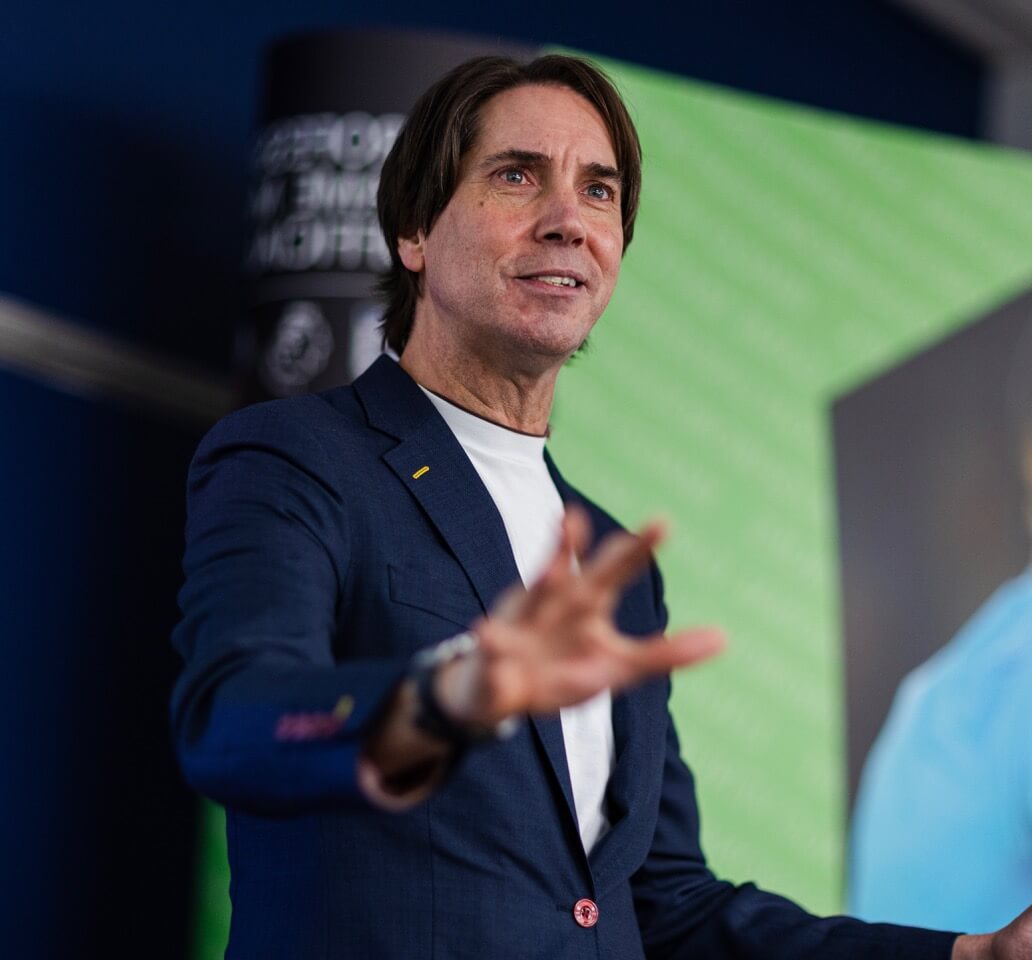
Featured guest: Steve Judge is an award-winning, international motivational speaker, two times world champion in paratriathlon, author, coach, and workshop facilitator. He shares his journey that took him from wheelchair to world champion and beyond in business.
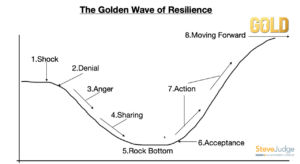
MSP’s live in a world of relentless and complex changes, challenges and uncertainty. In this podcast Steve will share the Golden Wave of Resilience needed to combat constant pressure and the need for peak performance. It will empower the audience to unlock the essential habits that high achievers use to succeed in this competitive world.
It’s really hard work being a business owner, more so I think in the MSP world than in many other industries. Not only because you have a lot of reactive work that you have to do day in, day out, but also because the tech world is constantly changing at a speed that would genuinely astonish other business owners.
I mean, you go and ask a dentist about changes to their industry and yeah sure, they might get new technology coming out now and again like a better drill or a sharper pointy thing that they can shove into people’s mouths, but essentially their job is exactly the same today as it was 10 years ago, 20 years ago. The techniques and the training for other businesses like dentists improves slowly over time. If a dentist had to change at the pace at which you have to change, I don’t think they would keep up, do you?
And that’s why a lot of MSPs are literally exhausted a lot of the time because it’s so easy to blink and the amount of work that you have to do has just gone up again. My special guest today is an expert at helping MSP owners with exactly this problem. Let’s get him on right now and get him talking about how all MSPs can improve their own personal resilience.
Hi, I’m Steve Judge. I’m a two times author, two times world champion and now I’m an international motivational speaker helping people to achieve their goals.
Amazing. What a great intro. Thank you so much, Steve. You and I were introduced by an MSP that I work closely with called John Williams. He saw you speaking at an event and he sent me a text right there at that event saying, “You’ve got to get this guy onto your podcast.” So thank you, John, for connecting us, and thank you so much, Steve, for joining us on the podcast.
We’re going to talk today about resilience and MSPs, you and I were just chatting about the complications that exist for MSPs and how there’s almost no other job anywhere else in the world, apart from maybe being a politician, and who wants to be a politician, but there’s no other job anywhere in the world where everything just changes all the time, and how some MSPs thrive in that and for other MSPs it’s a constant battle to keep up with that. And you’re going to talk a lot about resilience and how you can help strengthen yourself.
But before we do, I mean, you’ve got a pretty impressive biog. You’ve obviously written these books and you were just telling me you’ve had a documentary film crew today in your house filming you. It’s all very cool. I’m sure it all didn’t start off like this. Typically, this kind of overnight success often hides 10 or 20 years worth of hard work. So tell us briefly what your journey has been. How have you got to the position where you are today?
Goodness me, overnight success, yeah, certainly not that. Where do I start? At childhood, I don’t know. I’ve had an eclectic life, let’s say that. So I’ve always loved running, always loved being fit, healthy. When I left school, I worked down the coalpits of Yorkshire, so I’ve been as a coal miner, then became an engineer. An engineer is very important because it’s very much about having problems and finding solutions and I like that as an engineer.
Going through my life, had a near fatal car accident in 2002 where I got both my legs crushed, was told that I may never walk again. That to me was a catalyst moment. That to me was for me to set goals and work towards them, having to grow my leg back by four inches, learning to stand again, learning to walk again. When I got to that stage, much as I was disabled in both legs, I started thinking about what I could do rather than what I couldn’t do. This is where the resilience thing comes in massively as well as goal setting.
So then I set goals, worked towards them physically in swimming and cycling, eventually got into running as a disabled athlete, competed as a paratriathlete, swimming, cycling and running. Became British champion in the year 2009, grabbed opportunities, set even more goals, used even more resilience to eventually become European champion and two times world champion. I then went on from there to retire from international competition and wanted to help others pay it forward almost complete the circle as it were.
And so they found the best way to do that was to become a speaker, a professional speaker. And so that’s what I do now. I travelled the globe sharing my story, but inspiring people to achieve the thing in their life that they really want, that thing that they’re passionate about, that thing that excites them. And on that journey, you know it, there’s going to be some potholes, there’s going to be challenges, there’s going to be barriers and hurdles and that’s where the resilience kicks in.
So I talk about resilience as well. I’ve literally just come back from Kuala Lumpur where I was speaking at an AI and cyber security conference there, very much about resilience because MSPs, they’re struggling with the change all the time.
Everything’s changing all the time and nobody likes change, but it’s about encompassing it, accepting it, and then taking action so you can move forward.
And I talk about the golden wave of resilience. So that’s what I do.
I love that. We’ll come back to the golden wave of resilience in a second. And you’re right, nobody likes change that they’re not in control of. And obviously us as business owners, we are in this unique position where we get to change our business and actually it’s our staff who have to sort of catch up with us. But we get this overconfidence that we’re in charge of change and then the world changes around us. And you mentioned AI, I mean, MSPs have been aware of AI so much more than the average business owner for such a longer time, but that’s not the only change. In the channel, obviously cyber security changes every four seconds. Telecoms has completely changed in the last few years. Even the nature of managed services as a concept is a complete change to how it used to be. Nevermind Microsoft and all the other changes. So it’s constant change, change, change.
You talked about goals and the average MSP owner that I know and that I work with in the MSP Marketing Edge, when they set up their business, they were initially trying to get control over what they did and who they did it for and how they did that work. And then that desire for control, once they get that control, it then becomes a desire for freedom. Freedom to live their life, enjoy their kids, enjoy their family, have a good lifestyle. And most MSP owners are working towards that freedom and that’s the goal. The goal is, I want to have enough time and enough cash to live the life I want to live, whatever that is.
And most of them get frustrated because they get trapped within the business. Now, Steve, I know you will have heard this story a thousand times, and this is not all MSPs but this is a majority of MSPs. If we take that as the goal then, the goal is growing our business, getting on board new clients, generating more cash, having more time, enjoying our life and making sure we do all this before we hit 80. Where does resilience come into this? Is resilience as simple as the will to get up every morning and do the difficult things or is it something else?
Resilience became a bit of a buzzword in the pandemic, which we don’t really talk about nowadays if we can help it. But yes, everybody says, “You need resilience.” And people are going, “Okay, so what is resilience?” And this is the thing, being knocked down and picking yourself up, bouncing back, not giving in, tenacity, dedication, dog with a bone, this is all resilience. But people are still saying, “Yep, but what is it? What does it mean? How do I grow it? How do I get better at it?”
So I’ve got this concept called the Golden Wave of Resilience and it starts off with some kind of change, adversity, something that wasn’t expected. For me, it was a car accident. For others, it might be various things in their life, in their career, whatever. You have that thing that changes. And when that thing happens, it’s horrible. And you go into a fight or flight. The oxytocin kicks in and you’re like, “Oh my goodness, fight or fight.”
So immediately after that, you have denial because you go, “This can’t be happening. I can’t believe it. Don’t worry about it.” And then you realise that it is happening and that’s when your testosterone kicks in. So if you imagine this curve, you started off with some kind of adversity, you’re now going down. The testosterone kicks in, you will get angry, you’ll get frustrated. You might slam a door or whatever or you might just shout or swear.
And then after that, you’ve got the sharing part. The sharing is where you need to offload. You need to share. And when I say the sharing part, what I’m saying is it’s really good if you can control this yourself. So being angry in your own way, going to the gym, gardening, screaming into a pillow, because if you don’t control the anger, it will burst out and it can come out at a really bad time.
The sharing you can share to others, you can share to your colleagues, to your friends, to your family, to a therapist, a counselor. And if you don’t want to do that, then share with yourself. You’ve got to admit to yourself as to what’s going on, what’s going on inside, how do you feel? Write it down, a journal. Maybe even listen to some poetry or some music or the lyrics. One way or another, you’ve got to do the sharing. You can’t keep it bottled in now.
Whatever you do, you will still hit rock bottom. So you’re now at the bottom of the curve and rock bottom is a horrible place. It’s dark, it’s depressing. You might be sulking, but like I said, you might be depression as well. So it’s a dark place. Now then how long you stay in this depends on how you control the anger phase and the sharing phase.
So one way or another, you will eventually see the light at the end of the tunnel, which is great. And that means acceptance.
Acceptance means that once you accept the situation, you can do something about it. Your hormones have settled down a little bit. You’ve got a bit of serotonin kicked in there. You can start seeing things clearly. You’re not going to lean on your excuses and you’re now going to take some action. Once you start taking action, you’re now coming back out of that curve. You take action, you get a dopamine release and you feel good about it. You think, okay, I’m going to do more action and feel even better. Serotonin, dopamine release, that will bring you up the curve all the way up to moving forward and back on track to where you were or working towards your goal.
Now, if you look at the curve, I usually have a diagram that I talk about and show the end of the curve is actually higher than the beginning of the curve, meaning that once you go through the golden wave of resilience, you’re at a higher plane than where you started. Meaning that change, adversity, all of that horrible stuff is a good thing because it takes you to a higher place, but you’ve got to go all the way through and you’ve got to do each section properly.
Otherwise, you’ll just be in a continuous circle. If you don’t share properly, if you’re not angry properly, if you’re not in rock bottom properly, if you say, “Oh, I don’t need this. I’ll just carry on because I’m just going to pull myself together and battle on … ” It doesn’t work. It does initially, but you’ve really got to listen to what your body needs and what you need to do to take you through to that higher pain. And that to me is a definition of resilience.
And that is a very clear definition, Steve. And the trigger thing at the beginning, I mean, you talked about the massive thing that happened to you and it’s an incredible story, but can it be something as simple as you lose a client? You lose a client that just tips you closer to not quite having enough cash to pay your staff and can people go through that process very quickly and end up higher as they go through that process or does it tend to be just the bigger things?
Oh, I think it’s everything. I think it’s losing your phone, your wallet, your keys, stubbing your toe. When you walk past the door and it catches you and your hand on, you’re just like, “Oh, why is it always happening to me?” You immediately go through the wave of resilience, you’re angry, you’re in denial. I can’t believe this. I can’t believe I’ve lost my phone again, denial, you’re angry about it, then you need to share, “Okay, how’s it going? It’s not the end of the world.” Yeah, but it is, everything’s on my phone that’s like rock bottom. And they go, “Right, where was I when I last had it?” Acceptance. And then you start looking for it, taking action, you find it hopefully, eventually, and then you move forward.
Everything is the wave of resilience. And the more you practice it with the smaller things like stubbing your toe or losing your phone, then when something does happen that’s big, that’s catastrophic, like losing a client, not having enough money in the bank, or getting a fine, or a car accident, whatever, you will still go through the golden wave of resilience, but you know what’s going on and it’s so precious. It’s so important to know where you are and what’s going on because that’s what you need.
You need the information. Dealing with it, yeah okay, that takes action and that takes more practice, I guess, but sometimes that’s when you can start asking for help. Now I say that with hesitation because sometimes it’s really hard to ask for help. I struggle with it, but that’s what you need, especially in the sharing phase, finding somebody that you can reach out to, that you can share with, that you can ask for help, that will really help you in the whole process of it.
I love that. And you forgot to mention the small thing that there is no coming back from. So it’s not stubbing your toe, it’s not losing your phone, it’s treading on a piece of Lego that your child has left on the carpet. We all know there’s no coming back from that. That just sits in a category of its own.
So in terms of building up our own resilience then, I think you’ve already given the answer to how to do that, which is to practice. To practice on the smaller things so we’re then learning and we’ve got that in place in our feelings and in our brain when we go through the bigger things. As you were saying that, the thought occurred to me of how do we help our staff? So how do we help technicians or how do we help even our children actually, our children, our staff, the other people in our life that we love, how do we help them to build resilience? Because obviously I guess you’ve got to want to build resilience in yourself before you can start to do it and go through this process and learn from it.
Yeah. I think it’s explaining it. I think explaining and for me, I draw the diagram and I say, okay, you’re really angry at the moment. This is where you are, you’ve got a bit of a way to go, so keep going on this journey, but you will come out the other end. And if they don’t understand what you mean, then explain to them and show them the graph so that they understand, like I said, the information is really important. And even the rock bottom when you’re sulking, and us men we can sulk for days, but when I’m in that process, I have a word myself and say, “I’m sulking.” I go, “Yeah, I know I’m sulking because I’m really annoyed about what happened.” And I say, “Well, okay, but nobody else is sulking. The world carries on. Everybody else is just moving on. It’s only you that’s sulking. So how long are you going to sulk for Steve?” And I go, “Well, I don’t know, a bit longer.” “Okay. Well, keep checking in on ourselves because when you’re ready, you need to stop sulking. You do need to pull yourself together. You do need to take acceptance and then we can move on.” And I go, “Yeah, okay, got it, but not yet. I’m still sulking.”
And sometimes it takes longer than other times, but you’re always checking in to see where you are so you can explain it to other people so that you can see where they are and say, “Have you talked to somebody about it? Or have you just gone for a walk or have you just sulked? Have you just watched Netflix and eaten some rubbish food or whatever? Because maybe that’s what you need to do before you can move on to the next stage.” And once they understand that you’re trying to help them and that they can see the process as well as you, whether it’s your staff, whether it’s your family or whether it’s your friends, it really helps them and that’s all you want to do. You want to help them through, but there’s some things you can speed up and know there’s a lot of things that you can’t, but if they know where they are, then you can almost hold their hand through the process and help them.
I love that. And the diagram you were discussing, is that on your website for anyone to go and have a look at?
Yeah. It’s on my website and I can send you a link to it and stuff. But yeah, it goes down and it comes up slightly higher than where you started. So it’s self-explanatory. But yeah, with all the descriptions as well, it’s really important.
Amazing. Well, look, you send that through to us and we’ll make sure that goes on our webpage. So we always do a full page that goes with every single episode of this podcast and that’s on mspmarketingedge.com. And Steve, just tell us about what you do. So how do you help MSPs? I know obviously you do your international speaking and you’ve got some books, but how can you help MSPs that are listening to this or watching this on YouTube and thinking, “Yeah, actually this guy talks a lot of sense.”
Just reach out. Okay. I’m here to help people and I love it when people reach out to me, whether that’s by email, go onto my website, www.steve-judge.co.uk. You can find my email, find my phone number, just reach out to me and ask for help and I will help you the best I can. That’s the best way. Yes, I do speak on the stage so I can speak at conferences. That helps. The workshops that I do are very much to do with goal setting, but there’s resilience section within that. The one-to-one coaching I do as well.
And then my books, the reason I wrote my books was to help people. On the stage, I speak for 45 minutes and people think they know my story and I think you know 45 minutes of my story and I’ve given out the best bits and the worst bits, but not all of the bits. So the first book I wrote was my autobiography and that’s got warts and all, it’s got everything in it. I think that’s a really precious book for me. It’s even got some poetry in it. It’s got some tunes for the journey. So you can’t judge my playlist. It’s my playlist and it is eclectic. It’s got things like AC/DC and Eminem, but it’s also got Chesney Hawkes and Bucks Fizz. It’s got a real spread, but it’s got lots of messages in there and lots of photos.
The second book I wrote again to help people. The second book is very much about goal setting. If you’ve got something that you desire that you really want, this book is for you. You work your way through the book, you do the exercises. Some of it is drawing a picture. Some of it is like making lists, but all the way through, by the time you get to the end of the book, you’ll have reached your goal. I call it your gold, which is why the book’s called Gold. Gold is an acronym for your Goal, your Opportunity, your Love, your Dream. What is that thing that you really want? And it could be personal, it could be professional, it could be your career, MSPs. They’ve always got goal setting and things that they want to do, things they want to learn, new technology, but it could be something more personal. It could be like you want to get a little bit fitter, a little bit healthier, you want to go more holidays, maybe even think about retirement. All of these to me are goals and that book helps you through.
Everything that I do is to help other people. I think that’s where I am in that position in my life that I just want to pay it forward. I want to make sure that the accident that I had all those years ago hasn’t had a detrimental effect on my life. And so I want to use it for the good that I can and to help other people.
Useful Links
- This podcast is powered by the MSP Marketing Edge, the place where 700+ MSPs generate leads, win clients & achieve freedom.
- Join me in MSP Marketing Facebook group.
- Connect with me on LinkedIn.
- Connect with my guest, Steve Judge, on LinkedIn. And visit his website.
- Mentioned book: Gold by Steve Judge.
- Got a question about your MSP’s marketing? Let me know.
Get a free MP3 of my book MSP marketing: Start Here
when you join 8,000 other MSPs getting my weekly newsletter
Inside, I’ll reveal the four biggest obstacles blocking your lead generation and the simple 3 step system that overcomes them.
Buy it now on Audible.
Or in the next few minutes when you start getting my email newsletter.
Discover the marketing used by successful MSPs to generate leads & win clients
Every week I send out a FREE 5 min MSP marketing win. Smart ideas used by hundreds of MSPs to generate leads and close prospects.
Sent weekly on Fridays. Unsubscribe any time.