Paul Green
/
April 19, 2026
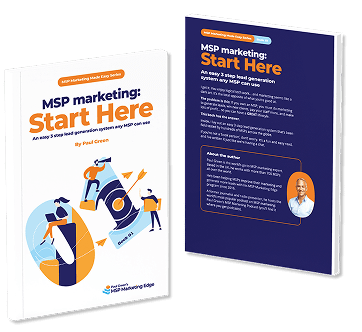
Get a free MP3 of my book MSP marketing: Start Here
when you join 8,000 other MSPs getting my weekly newsletter
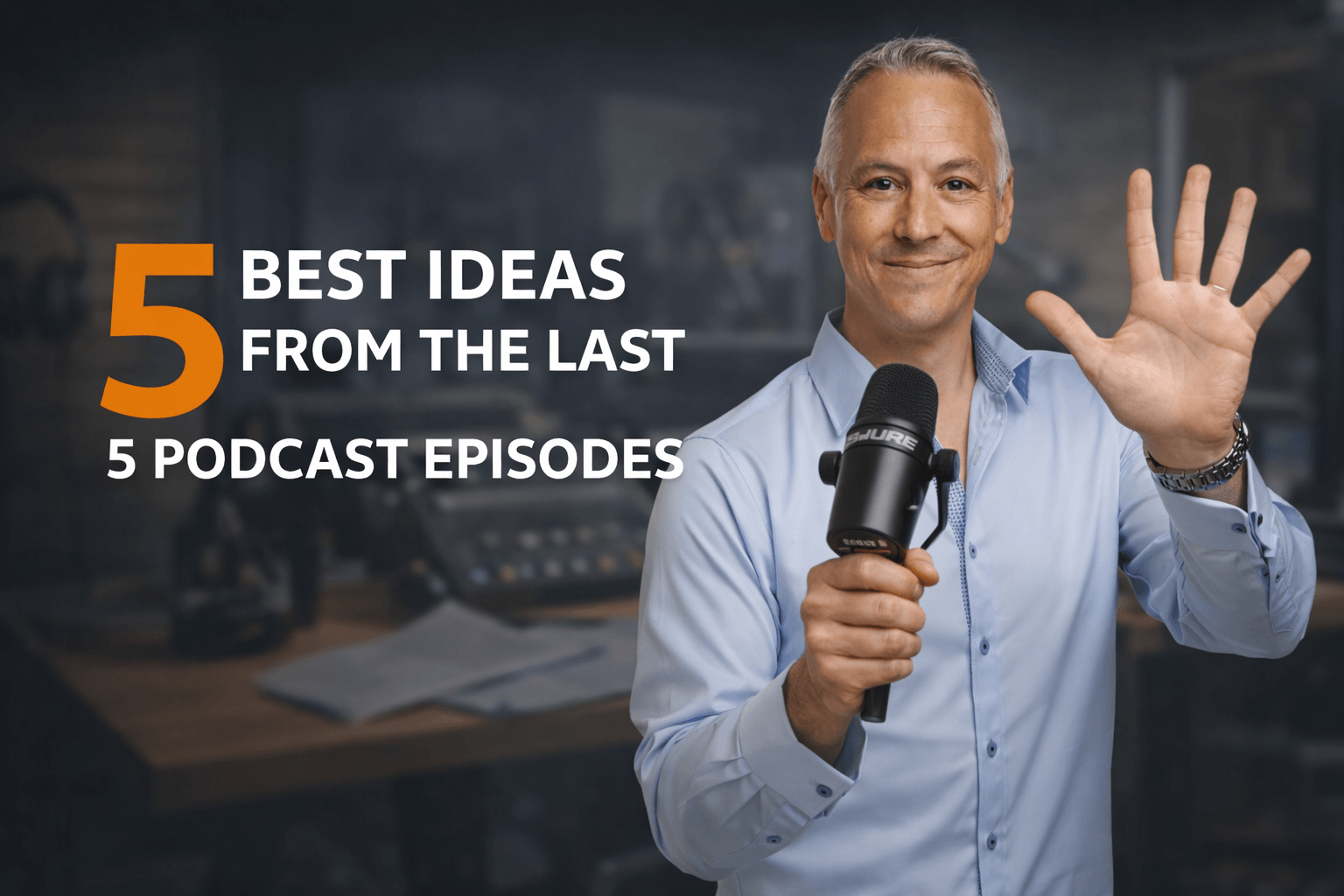
5 cool ideas from my last 5 podcast episodes... which one will you act on this week?
Every week on my MSP Marketing Podcast I cover three topics: typically one on marketing, one on business growth, and one guest interview. That’s a lot of ground covered, especially as we've done it every single Tuesday since 5th of November 2019 !
So I thought it would be useful to pull out the single best idea from each of the last five... the ideas that I think are most worth acting on, even if you’ve never listened to a single episode.
Here they are.
Idea 1: Delight doesn’t cost money. It costs attention
(from episode 332)
Most MSPs, when they think about delighting clients, immediately jump to discounts, gifts, or doing extra work for free. But the most powerful ways to make clients feel great about you don’t cost a penny.
Things like...
- Proactively telling clients what’s happening before they feel the need to ask
- Remembering what matters to them beyond their IT
- Removing small annoyances they’ve quietly learned to tolerate
- Telling them what you’ve prevented, not just what you’ve fixed
And the biggest one of all: Making it psychologically safe for them to bring you bad news. When clients feel they won’t be judged or lectured, they come to you earlier and trust you more.
Delight isn’t about doing more. It’s about being more intentional with what you’re already doing.
Idea 2: Every client success story contains three marketing assets
(from episode 332)
Your team does brilliant work every week. But when do you ever stop and tell the world about it?
Every great client story you have can be turned into three things:
- A written case study for your website and proposals
- A social media post built around the most dramatic or emotional part of the story
- A video, even just recorded on your phone, that you can reuse across your website, LinkedIn, and email
The magic ingredient isn’t just the result. It’s the emotions the result creates. A great story answers:
- What was at stake?
- What did it feel like before?
- How much better is life now?
When a prospect can see themselves in that story, you’ve already won half the marketing battle.
Go and find one story. Just one. Ask your team: What’s something amazing we’ve done for a client recently? Then write it up, post it, or record it.
Idea 3: Manufacturers don’t buy IT. They buy calm
(from episode 333)
If you’re thinking about targeting manufacturers as clients, the biggest mistake you can make is marketing to them like they’re any other business. Because they're really not.
Their world revolves around one thing: Keeping the production line running. Downtime doesn’t mean a few annoyed users. It means lost output, missed deadlines, idle staff, and very stressed owners.
So when you market to manufacturers, you’re not selling IT support. You’re selling risk reduction. Uptime. Stability. A zen feeling of calm.
The best MSP in their eyes isn’t the most innovative... it’s the one that feels the safest.
Talk about downtime in terms they understand. Show that you respect legacy systems even when you don’t love them. Explain how you test, plan, and schedule work outside production hours. That builds trust fast.
And yes, somewhere in most factories there’s a machine still running on an old XP box that hasn’t been rebooted in ten years because “if it stops, the whole place stops.” You need to show you understand that world... and won’t casually blow it up
(but good luck with the Win 95 version of this 😃)
Idea 4: Social proof is a habit, not a one-off task
(from episode 334)
You can talk about your service all day long. But the moment someone else says “ohWOWohWOWohWOW these people are amazing,” the whole dynamic changes.
There are three types of social proof every MSP should be collecting:
- Reviews on Google and other third-party platforms. These are the most powerful because people know you can't edit them
- Testimonials which are reviews you can control, but you can use them across all of your marketing
- Case studies which are the full story. If reviews are the match, case studies are the bonfire 🔥🔥🔥
The best moments to ask for a review? At the end of the first 90 days with a new client; just after a big successful project; or right after you’ve saved them from something serious.
One good case study can fuel your marketing for years. Most business owners are only looking for a new MSP once every five years or so... they’re not seeing your case study more than once. Which means you genuinely can’t have too much social proof.
This week’s challenge: Go and get one new piece of social proof. Just one. Crack on, then 😃
Idea 5: Your website traffic problem probably isn’t a traffic problem
(from episode 335)
If your MSP’s website doubled its traffic tomorrow, would that actually change your business?
For most MSPs, the honest answer is no. Because the problem isn’t traffic. It’s qualified traffic. The right businesses. The right decision makers.
The way to get more of the right people to your site isn’t to shout louder. It’s to become more specific. The clearer you are about who you want to attract, the easier it is to create content that pulls them in.
Think about what your ideal prospect is searching for late at night when they’re worried. “What happens if our server fails?” “How do we pass a cyber insurance audit?”
When you create content that calmly answers those questions, you talk directly to people who are already thinking about a problem they want to solve.
It's also worth saying that content that just lives on your website is too static. When I create a piece of content these days, I will repurpose it across all of my platforms so it appears on my website, in my LinkedIn newsletter, in my podcast, in my Facebook group, and often as advice to my MSP Marketing Edge members as well.
So... which one resonates most with you?
Tell me which one landed hardest for you. Or if there’s a topic you’d love me to cover on the podcast, I’d genuinely love to know. I read and reply to every email.
Get a free MP3 of my book MSP marketing: Start Here
when you join 8,000 other MSPs getting my weekly newsletter
Inside, I’ll reveal the four biggest obstacles blocking your lead generation and the simple 3 step system that overcomes them.
Buy it now on Audible.
Or in the next few minutes when you start getting my email newsletter.
Discover the marketing used by successful MSPs to generate leads & win clients
Every week I send out a FREE 5 min MSP marketing win. Smart ideas used by hundreds of MSPs to generate leads and close prospects.
Sent weekly on Fridays. Unsubscribe any time.