Paul Green
/
April 5, 2026
Get a free MP3 of my book MSP marketing: Start Here
when you join 8,000 other MSPs getting my weekly newsletter
I know of four or five MSPs who guarantee their work publicly. And guess what? They win more clients. Here's why
Let me ask you something uncomfortable.
If one of your clients came to you tomorrow and said they were desperately unhappy and wanted out of their contract... what would you do?
Be honest. You’d let them go, right? You’d work something out. Because keeping a client who is miserable isn’t good for anyone.
The vast majority of MSPs would do exactly that. Even those with clients locked into 12 or 24 month contracts. Even the ones who’d never admit it publicly.
So here’s what I don’t understand.
If you’re already willing to do this... if the protection for the client is already baked into how you operate... why are you keeping it a secret from every prospect you’re trying to win?
The silent guarantee every MSP already has
You already have what I call a silent guarantee. It exists in your business right now. You just haven’t said it out loud.
And that matters, because switching IT provider is one of the most nerve-wracking decisions a business owner can make. They don't understand technology, but they do understand that if their new provider gets it wrong, it could destroy their business.
Switching MSPs is a high-risk activity for business owners.
So when a prospect is sitting across from you, weighing you up, the question running through their head isn’t “is this MSP technically good?”. It’s “what happens if I get this wrong?”
Most MSPs do absolutely nothing to answer that question. They just hope the prospect trusts them enough to sign.
The ones who do answer it, clearly, explicitly, in writing, win a lot more deals.
Why I prefer the term “risk reversal”
The word guarantee makes a lot of MSP owners flinch. I get that. It feels like an invitation for people to take advantage.
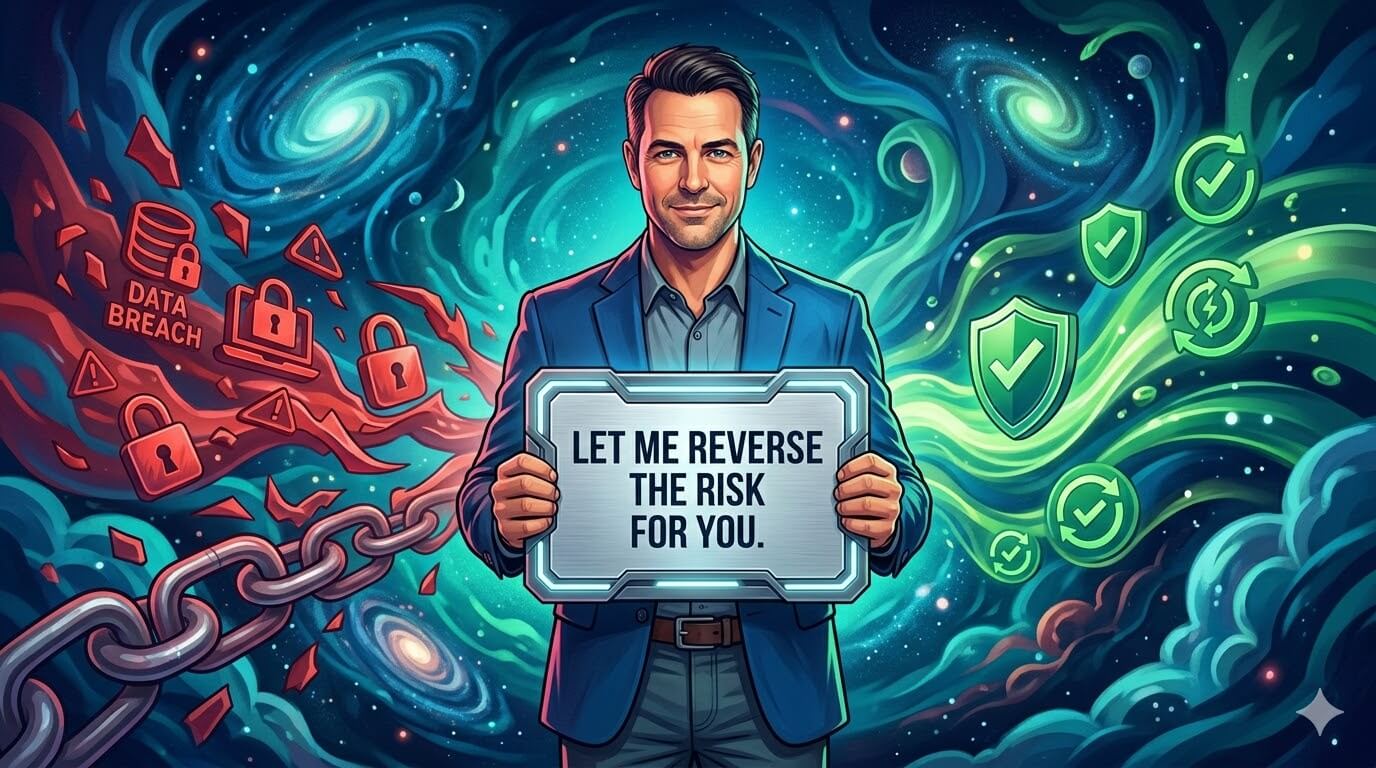
Risk reversal is a more useful way to think about it. The concept is simple: you take the risk away from the prospect and put it back on yourself. You’re telling them, explicitly, that if things don’t work out for whatever reason, they won’t be stuck.
And here’s the thing most people get wrong about this.
A 30 day money back offer sounds bold. But for managed services it’s worthless, for the prospect AND for you. The first month is all about onboarding. NOBODY is in a position to properly assess you in just 30 days. All a short guarantee does is put the prospect on a mental timer from day one, which is the complete opposite of what you want.
The longer and deeper your risk reversal, the more powerful it is. Because it signals confidence. You’re not afraid of the commitment, because you know exactly what you deliver.
Three types of risk reversal that work for MSPs
There’s no single right answer. The best risk reversal is the one you can genuinely stand behind. Here are three approaches that might work for you.
1) The long-term happiness guarantee
This is the most powerful version, and the one I recommend most. Something like: “If at any point in your first six months you’re not completely happy with us, just let us know. We'll release you from your contract and refund your fees in full.”
Six months. Not 30 days. Long enough for the prospect to actually experience what working with you is like. Long enough for them to stop worrying and start trusting.
And that's what makes this powerful, because when someone switches one MSP to another, they are desperate for it to work. They are more desperate for it to work than you are!
2) The service level guarantee
Generally, I'm not a big fan of SLAs. I understand some buyers want them, but to me they represent a tool you give to your clients that they can beat you with! Instead of contracting yourself into response times, what you could do instead is guarantee outcomes.
An example. 20 years ago (when I owned a general marketing company) I worked with an industrial door repair company here in the UK. Their guarantee was that they would fix your door on the first engineering visit, or you didn't pay. Sometimes that meant that their engineers would be out on site for 15 to 20 hours, but they were a 24/7 operator anyway. This service guarantee was easy for them to maintain, and it allowed them to dominate their marketplace.
Notice they didn't guarantee that they'd have a van on site within 30 minutes because that was almost impossible for them to do all day, every day.
What outcomes could you guarantee other than response times?
3) The clean exit guarantee
This one directly tackles the fear of being trapped. Something like: “If you ever decide to leave us, we'll handle the entire transition to your new provider. We’ll hand everything over, help them get set up, and charge you nothing for it.”
Again: If you’d do this anyway because you're a professional, you might as well get credit for it... and use it to win a client in the first place.
In fact, it could almost become a joke you tell in sales meetings... that you've had the clean exit guarantee in place for years, but you've never yet had to deliver on it. That implies that clients just don't leave you.
“But Paul... what if someone takes advantage of me?”
Always the first question I get, and worth addressing directly.
Think about who is actually reading your risk reversal statement. It’s a business owner or manager trying to make a sensible decision for their company. They’re not trawling the internet looking for a free month of IT support. They have far bigger things to worry about.
The number of clients who will ever invoke your guarantee will be tiny. The number of prospects who sign with you because it reduced their anxiety enough to commit? That number will be much, much bigger.
I promise you with every fibre of my being, you could use a guarantee for the next ten years and you'll only ever get one client who claims. That will either be because you've made a big mistake that you can't recover from, or they're a noisy, obnoxious client, and you'll be glad to see the back of them!
Where to put it
Your risk reversal needs to be visible. Not buried in a contract or hiding on a terms and conditions page.
On your website: All the main pages, including your home page, your services page, and your About Us page. Put it where prospects will see it.
In your sales proposals: Turn it into a named section, not a footnote.
In your marketing content: Write an email about it for your automated sequence that goes out to people joining your list. Do posts about it on LinkedIn.
Say it out loud: Make sure you mention it during every single discovery call and sales meeting. Risk reversal doesn't work if it's covert; it must be overt.
Over to you
Does your MSP currently offer any kind of risk reversal to prospects?
If not, is it because you genuinely couldn’t stand behind one? Or is it just that nobody ever suggested you should?
Get a free MP3 of my book MSP marketing: Start Here
when you join 8,000 other MSPs getting my weekly newsletter
Inside, I’ll reveal the four biggest obstacles blocking your lead generation and the simple 3 step system that overcomes them.
Buy it now on Audible.
Or in the next few minutes when you start getting my email newsletter.
Discover the marketing used by successful MSPs to generate leads & win clients
Every week I send out a FREE 5 min MSP marketing win. Smart ideas used by hundreds of MSPs to generate leads and close prospects.
Sent weekly on Fridays. Unsubscribe any time.